
The heel stick procedure is one of the most commonly performed capillary blood collection methods in neonatal care. It enables healthcare professionals to gather small blood samples for essential laboratory tests, including metabolic screenings, bilirubin levels, blood glucose monitoring, and infection assessment. Because newborns are highly vulnerable and have delicate skin, mastering proper heel stick techniques is essential to ensure accuracy, safety, and minimal pain.
Why Heel Stick Matters in Capillary Blood Sampling
Newborns have limited venous access, making capillary blood sampling via heel stick an efficient and minimally invasive alternative. Accurate collection ensures reliable laboratory results, helps detect critical conditions at an early stage, and reduces the need for repeat procedures. According to clinical guidelines, poorly performed heel sticks may lead to sample hemolysis, tissue damage, increased pain, and complications such as bruising or infection. Therefore, correct technique directly impacts diagnostic accuracy and neonatal comfort.
Correct Angle and Depth for a Newborn Heel Stick
The effectiveness of a heel stick test depends largely on the correct puncture angle and depth. Clinical recommendations indicate:
- Ideal angle: The lancet should be held at approximately a 90-degree angle to the skin surface, as this allows for a clean vertical puncture into the capillary bed.
- Safe puncture depth: For term newborns, the maximum recommended puncture depth is no more than 2.0 mm to avoid injury to bone or deeper tissues.
- Appropriate sampling site: The puncture should be performed on the lateral or medial plantar surface of the heel, avoiding the central area where bone is more prominent.
Using a controlled depth lancet and maintaining proper technique helps minimize trauma and ensures consistent blood flow for sampling.
Pain Reduction Strategies: Warm vs. Cold Compress
Pain management is a critical aspect of neonatal care, as repeated painful experiences in early life may affect long-term stress response. Evidence-based strategies for pain reduction during heel stick procedures include:
✅ Warm compress (preferred):
- Applying a warm compress (around 40°C or 104°F) for 3–5 minutes improves blood flow and reduces discomfort.
- Studies indicate that warming is associated with higher success rates and less crying during the procedure.
✅ Cold compress (less common for heel sticks):
- Cold compresses are more commonly used to reduce inflammation or swelling post-procedure rather than as a preparation method.
- Using cold before puncture may constrict blood vessels, reducing capillary blood flow and making sampling more difficult.
✅ Additional pain-reduction measures:
- Swaddling the baby for comfort and security.
- Administering sucrose or breast milk before or during the procedure.
- Encouraging skin-to-skin contact if appropriate.
Using effective pain control strategies helps improve infant comfort and enhances cooperation during clinically necessary procedures.
Best Swabs for Neonatal Heel Stick Blood Sampling
Proper swab selection plays a crucial role in skin preparation and infection control. For newborns, the ideal swab should be:
- Gentle on delicate skin while effectively reducing microbial presence.
- Alcohol-based wipes (70% isopropyl alcohol) are widely used; however, they must be allowed to dry completely to avoid sample hemolysis.
- Chlorhexidine-based swabs may be used in some neonatal units for better antimicrobial effect, but should be applied carefully to prevent skin irritation.
- Sterile gauze or hypoallergenic swabs are often preferred for wiping the first blood drop, which may contain tissue fluid.
Choosing neonatal-appropriate swabs ensures safety, accuracy, and minimal irritation to newborn skin.
Simulation Training vs. Clinical Practice: The Role of Training Models
For healthcare students, mastering heel stick procedures requires both theoretical understanding and hands-on experience. Direct practice on newborns without adequate preparation may increase risks, cause pain, and lead to improper sampling.
Clinical training using neonatal heel stick simulators offers multiple advantages:
- Enables learners to understand anatomical landmarks and puncture sites.
- Helps practice correct puncture depth and angle.
- Allows repetition for skill reinforcement without harming real infants.
- Builds confidence before entering clinical environments.
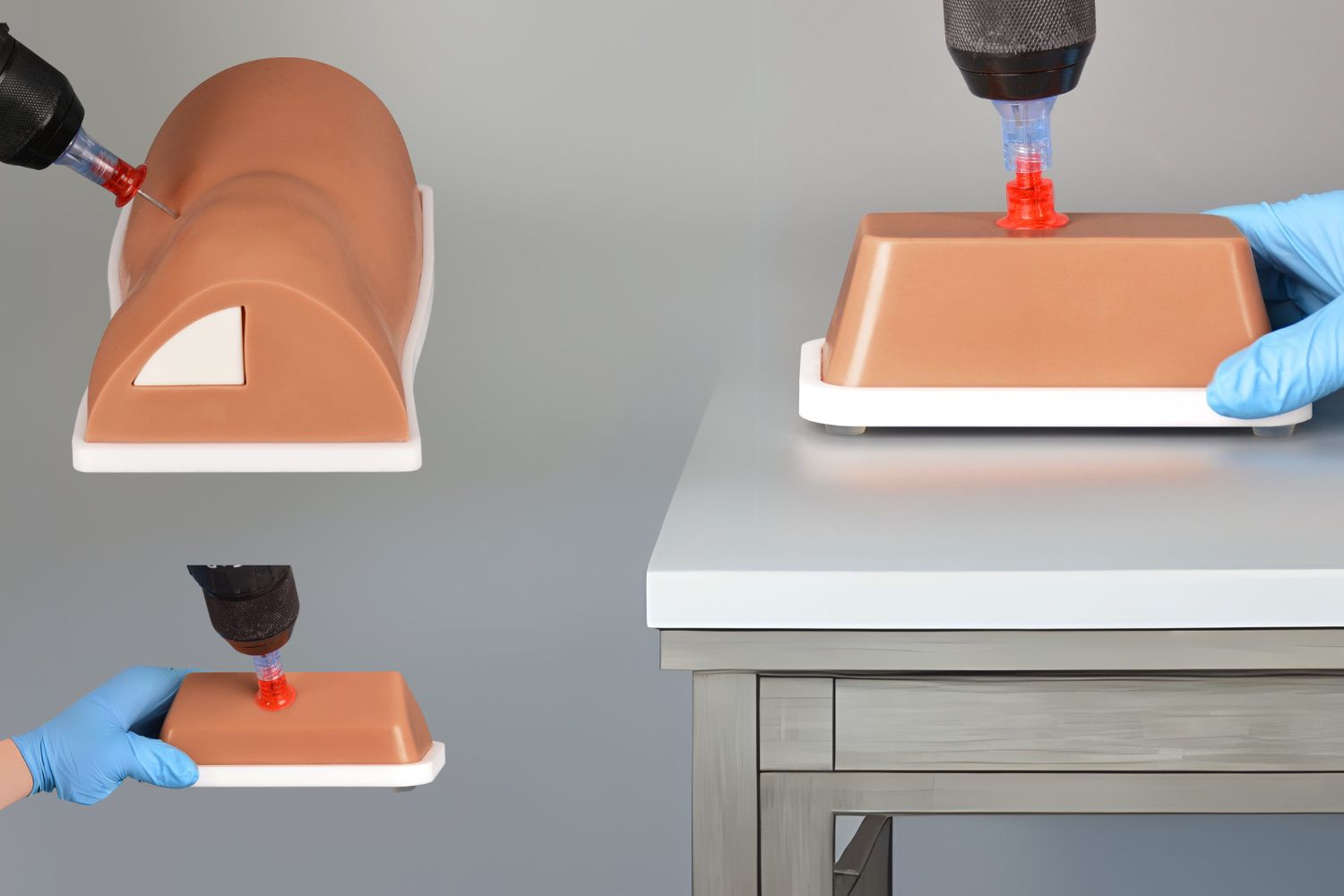
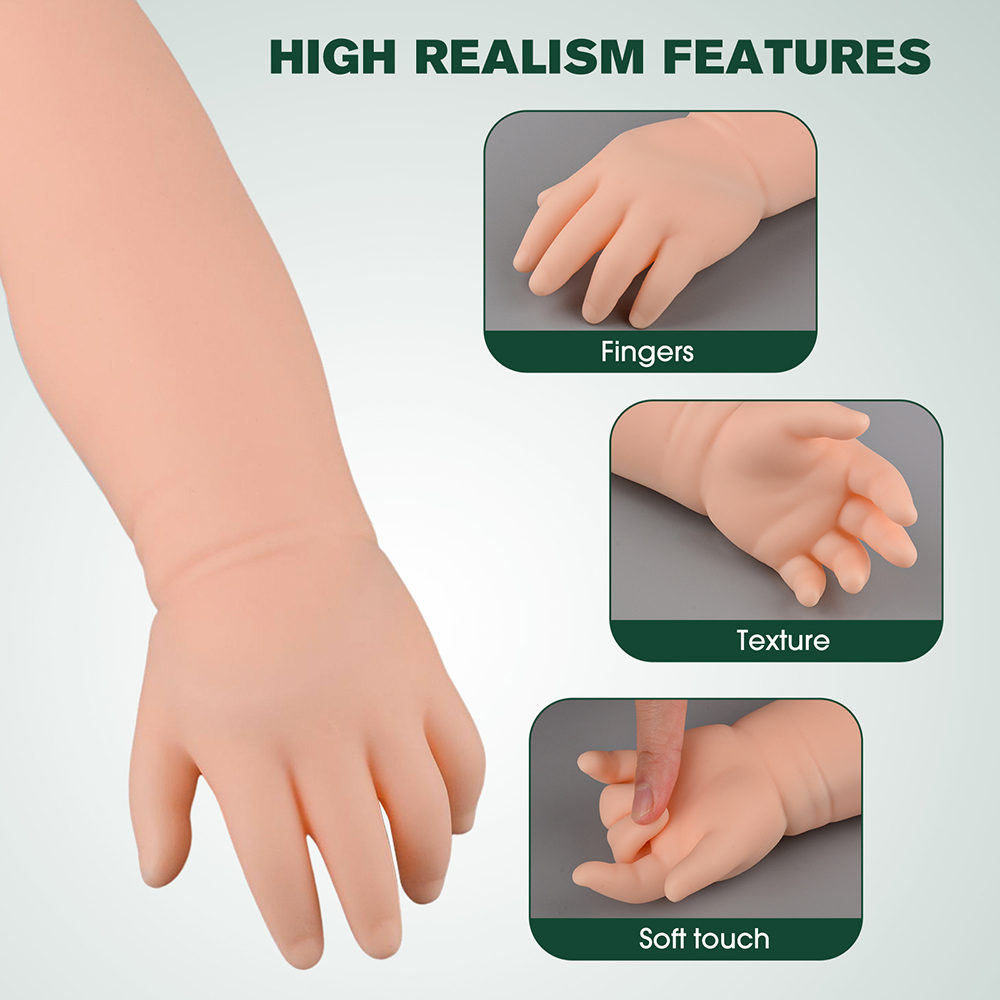
A highly realistic newborn heel stick model, such as the Infant Heel Stick Blood Sampling Training Simulator, provides tactile feedback and simulates capillary blood flow. This allows students and professionals to refine their skills in a safe and controlled learning environment.
👉 To practice accurate technique and ensure readiness for clinical application, a dedicated infant heel stick simulator like the one available here: Infant Heel Stick Blood Sampling Training Simulator is an excellent training solution for nursing schools, neonatal care programs, and clinical simulation labs.
Conclusion
Performing a newborn heel stick correctly requires a strong understanding of anatomical sites, appropriate sampling angle and depth, and pain reduction strategies. By selecting proper swabs and using clinically recommended techniques, healthcare providers can improve blood sample accuracy and ensure neonatal safety. With simulation-based training, students can gain confidence and proficiency before transitioning into real-world neonatal care settings, ultimately enhancing patient outcomes in clinical practice.
.jpg?w=1600&h=1600)
.jpg?w=1600&h=1600)
.jpeg?w=1600&h=1600)
.jpeg?w=1600&h=1600)
.jpeg?w=1500&h=1500)
.jpeg?w=1500&h=1500)
.jpeg?w=1500&h=1500)
.jpg?w=1600&h=1600)
.jpg?w=1600&h=1600)
.jpeg?w=1000&h=1000)
.jpeg?w=1000&h=1000)
.jpeg?w=800&h=800)
.jpeg?w=1500&h=1500)
.jpeg?w=1500&h=1500)
.jpeg?w=1500&h=1500)
.jpg?w=1500&h=1500)
.jpg?w=1500&h=1500)
.jpeg?w=1500&h=1500)
.jpeg?w=1500&h=1500)
.jpg?w=1600&h=1600)
.jpg?w=1600&h=1600)
.jpeg?w=1000&h=1000)
.jpeg?w=1000&h=1000)