
Intramuscular (IM) injections are widely used in clinical practice to deliver medications deep into muscle tissue for reliable absorption. Choosing the correct injection site is essential for patient safety, comfort, and treatment effectiveness.
This guide explains the four common intramuscular injection sites, how they are identified, and when each site is typically used in training and clinical settings.
What Are Intramuscular (IM) Injection Sites?
Intramuscular injection sites are specific muscles selected for medication delivery based on muscle size, depth, and proximity to nerves and blood vessels. Proper site selection helps ensure consistent absorption while reducing the risk of complications such as nerve injury or improper needle placement.
Understanding IM injection sites is a foundational skill for nurses, medical students, and injection training programs.
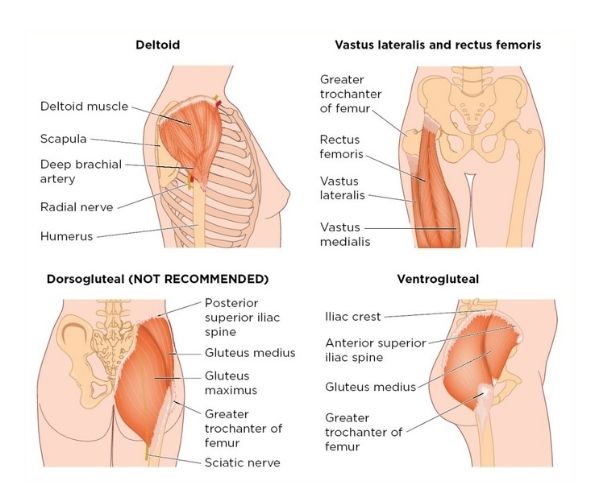
What Are the 4 Common Intramuscular Injection Sites?
1. Deltoid Muscle (Upper Arm)
The deltoid muscle is a common site for intramuscular injections, especially in adults. It is frequently used for vaccines and small-volume medications.
- Easily accessible
- Suitable for smaller injection volumes
- Requires accurate landmark identification to avoid the acromion and radial nerve
2. Vastus Lateralis (Thigh)
The vastus lateralis muscle, located on the outer thigh, is often used for infants, children, and patients who require self-injection.
- Large muscle mass
- Minimal risk to major nerves and blood vessels
- Common choice in pediatric and home-care settings
3. Ventrogluteal Site (Hip)
The ventrogluteal site targets the gluteus medius muscle and is considered one of the safest intramuscular injection sites in adults.
- Thick muscle with good absorption
- Lower risk of nerve and vascular injury
- Requires familiarity with anatomical landmarks such as the iliac crest and greater trochanter
This site is widely recommended in modern injection training programs.
4. Dorsogluteal Site (Buttock)
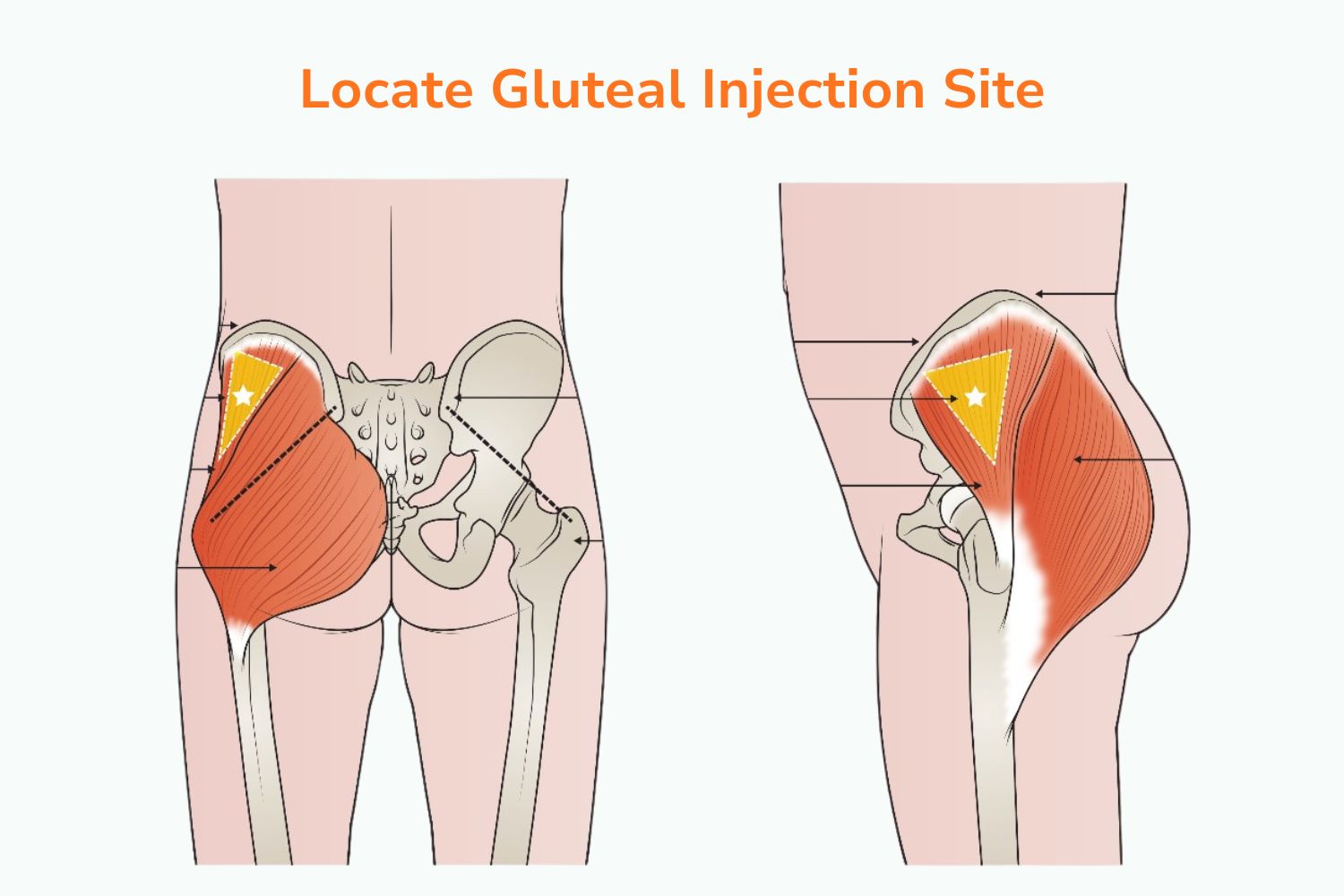
The dorsogluteal site is a traditional intramuscular injection site located in the upper outer quadrant of the buttock.
- Historically common in clinical practice
- Requires careful landmark identification
- Increasingly debated due to proximity to the sciatic nerve
When using this site, precise anatomical knowledge is essential.
How to Locate Intramuscular Injection Sites Safely
Safe IM injection begins with accurate identification of anatomical landmarks rather than visual estimation alone. Key principles include:
- Using bone landmarks to define injection zones
- Assessing muscle thickness and patient positioning
- Avoiding areas with major nerves or blood vessels
For training purposes, repeated hands-on practice with anatomically accurate models can significantly improve confidence and accuracy.
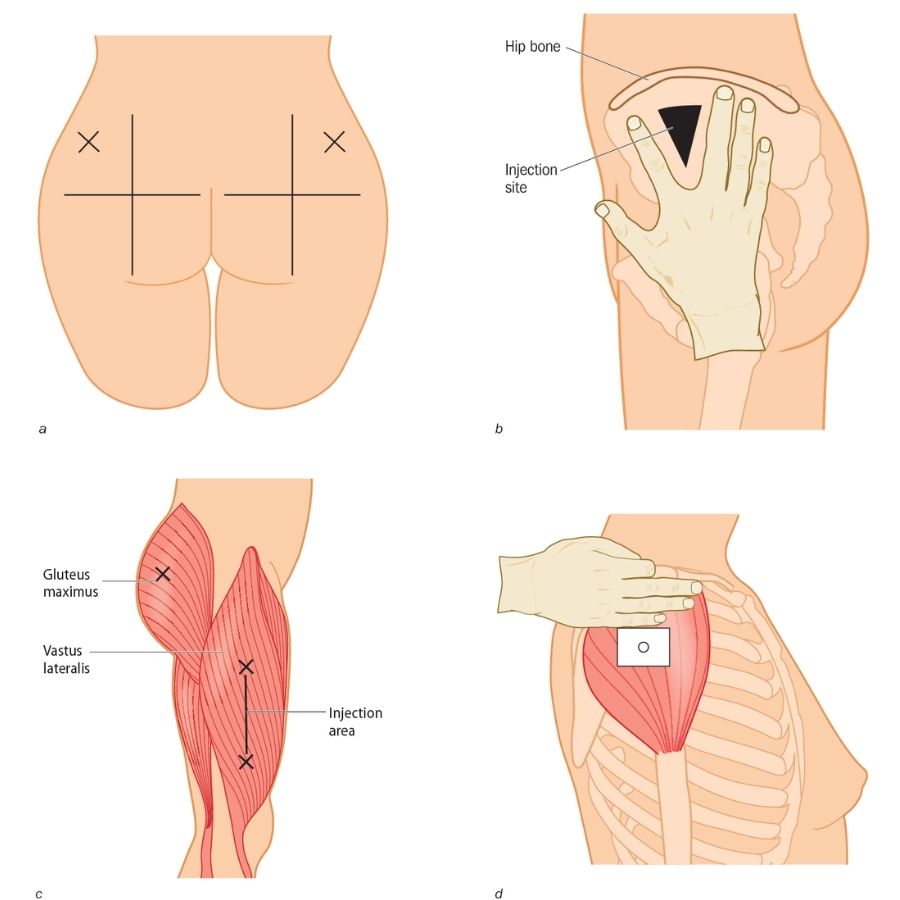
Choosing the Right IM Injection Site for Training and Practice
Different injection sites present different challenges during training. While the deltoid and thigh are often easier for beginners, gluteal injections require a deeper understanding of anatomy and landmark-based positioning.
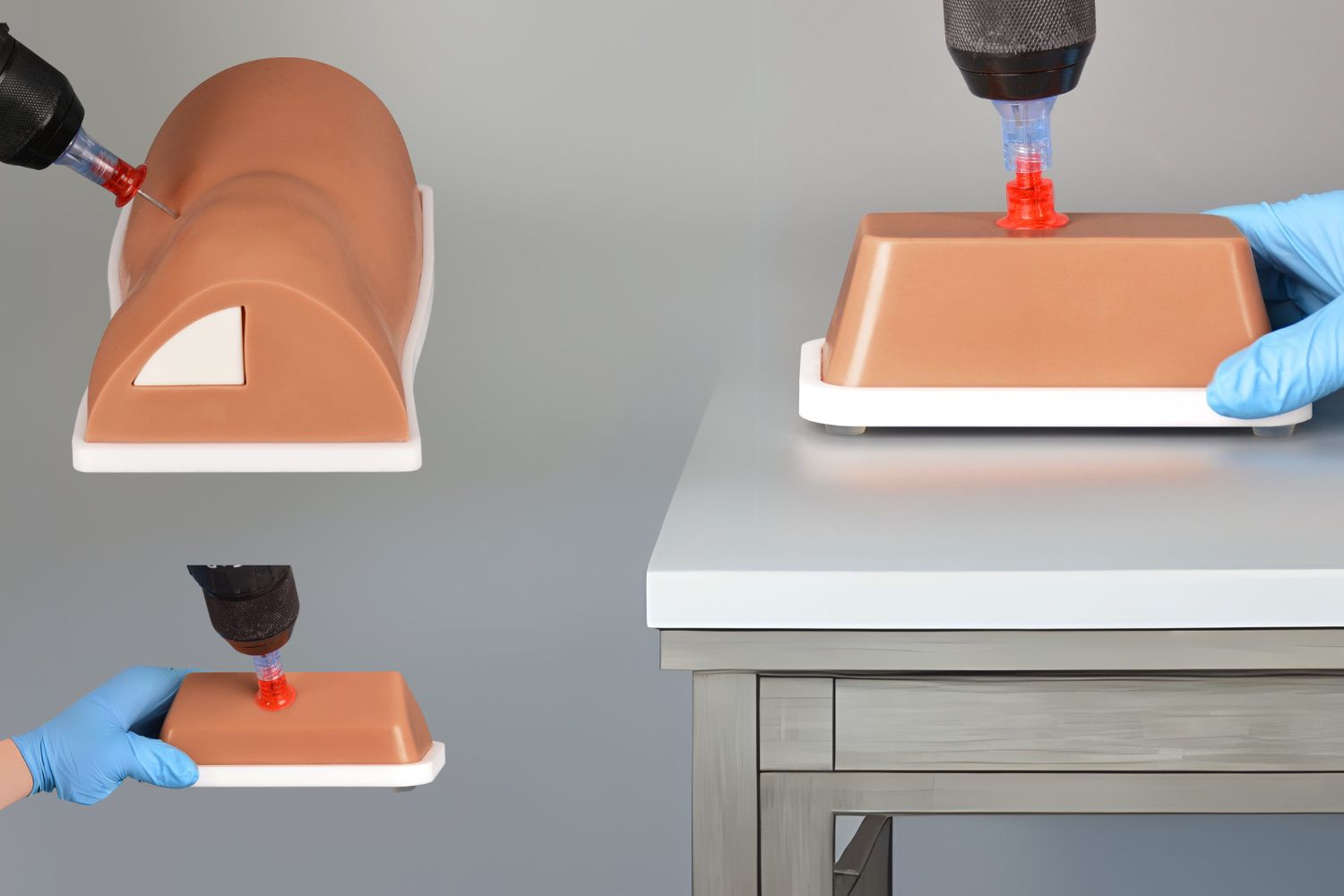
For learners practicing hip-based injections, a Gluteal Intramuscular Injection Model with clearly marked anatomical landmarks can help reinforce correct ventrogluteal injection technique and site recognition in a controlled environment.
For learners practicing deltoid-based injections, a wearable IM injection pad is recommended.
When injections involve the gluteal region, site selection becomes especially important for safety and effectiveness.
You may also find these guides helpful:
- Gluteal Injection Sites: How to Find the Correct IM Injection Spot
- Dorsogluteal vs Ventrogluteal Injection Sites: Safest Gluteal IM Injection
FAQ – Common Questions About IM Injection Sites
Q1: What are the 4 sites for intramuscular injection?
The four common IM injection sites are the deltoid muscle, vastus lateralis, ventrogluteal site, and dorsogluteal site. The appropriate site depends on patient age, medication volume, and safety considerations.
Q2: What are the most common intramuscular injection sites?
In adults, the deltoid and ventrogluteal sites are most commonly used. In infants and young children, the vastus lateralis is preferred due to muscle size and safety.
Q3: Which intramuscular injection site is used most often?
The deltoid muscle is frequently used for vaccines, while the ventrogluteal site is often selected for larger-volume or deeper intramuscular injections.
Q4: How do you locate intramuscular injection sites safely?
Safe location relies on identifying anatomical landmarks, positioning the patient correctly, and avoiding nerve-rich areas. Proper training and repeated practice improve accuracy.
Q5: Is the buttock a common site for intramuscular injections?
Yes, the buttock can be used for IM injections, but it is important to distinguish between dorsogluteal and ventrogluteal sites, as each has different safety considerations.
Q6: Which muscle is used for intramuscular injection?
Common muscles used for IM injections include the deltoid, vastus lateralis, and gluteus medius, depending on the selected injection site.
Q7: Why is site selection important for intramuscular injections?
Correct site selection helps ensure effective medication absorption and reduces the risk of nerve injury, vascular damage, and injection-related complications.
Explore IM injection trainers for practicing or training intramuscular injection techniques.
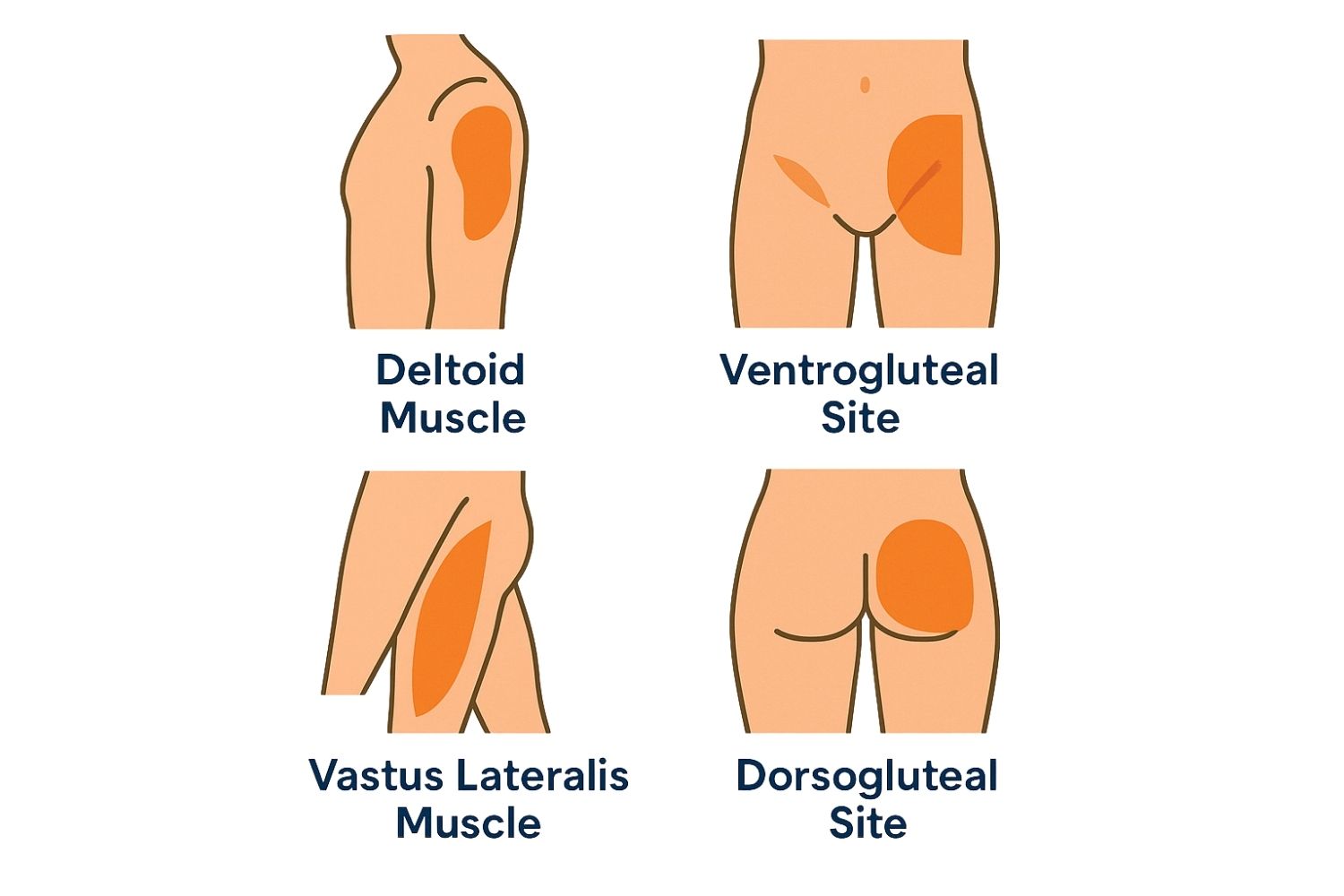
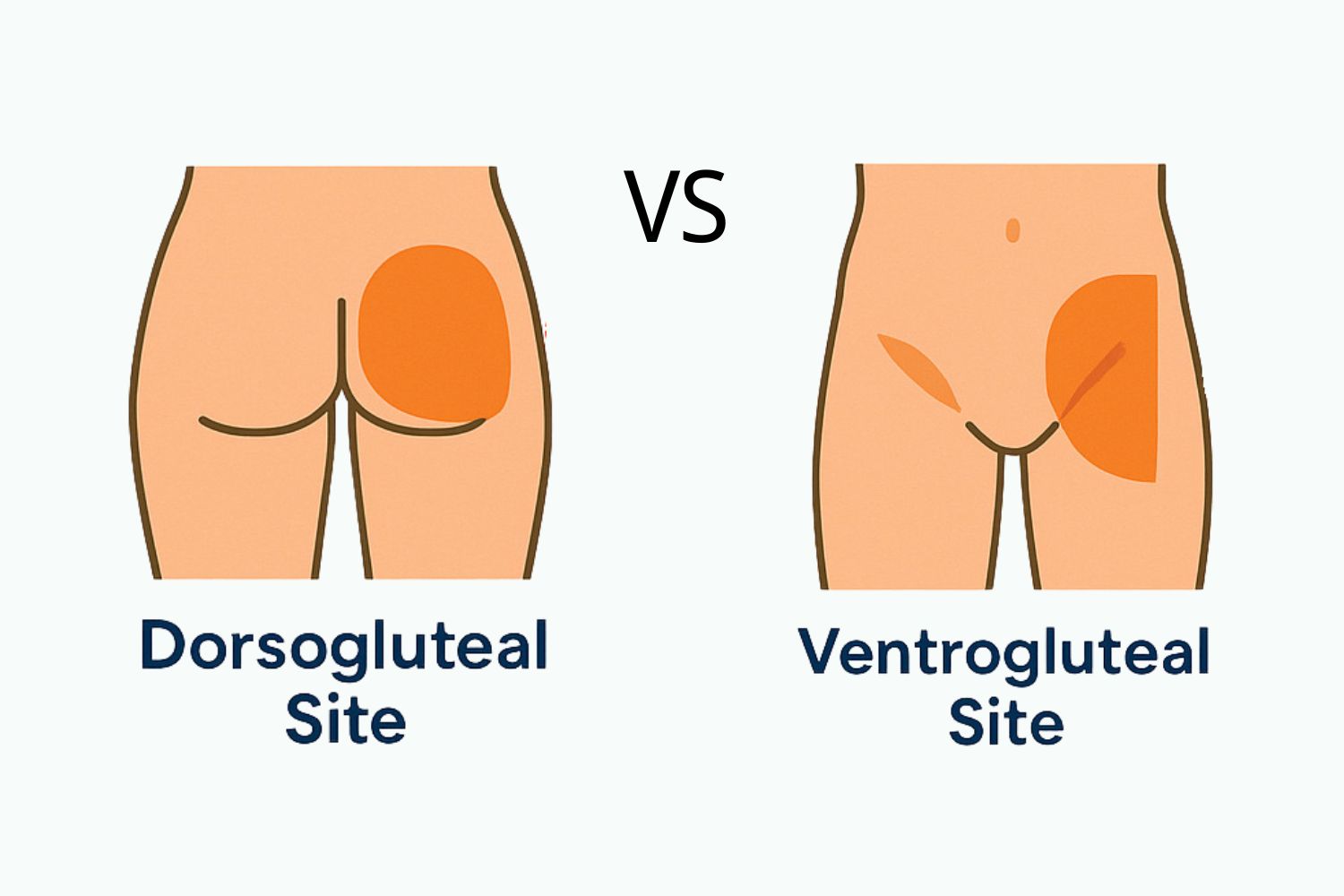
.jpg?w=1600&h=1600)
.jpg?w=1600&h=1600)
.jpeg?w=1600&h=1600)
.jpeg?w=1600&h=1600)
.jpeg?w=1500&h=1500)
.jpeg?w=1500&h=1500)
.jpeg?w=1500&h=1500)
.jpg?w=1600&h=1600)
.jpg?w=1600&h=1600)
.jpeg?w=1000&h=1000)
.jpeg?w=1000&h=1000)
.jpeg?w=800&h=800)
.jpeg?w=1500&h=1500)
.jpeg?w=1500&h=1500)
.jpeg?w=1500&h=1500)
.jpg?w=1500&h=1500)
.jpg?w=1500&h=1500)
.jpeg?w=1500&h=1500)
.jpeg?w=1500&h=1500)
.jpg?w=1600&h=1600)
.jpg?w=1600&h=1600)
.jpeg?w=1000&h=1000)
.jpeg?w=1000&h=1000)