
Correctly identifying the gluteal injection site is a core skill in intramuscular (IM) injection practice. Whether in nursing education, clinical training, or patient instruction, choosing the right site helps ensure proper medication absorption and reduces the risk of avoidable complications.
This guide explains the main gluteal injection sites, how to locate them using anatomical landmarks, and what to watch for during practice without assuming prior experience.
What is a Gluteal Injection Site?
A gluteal injection site refers to a specific area of the gluteal muscles used for intramuscular injections. These muscles provide sufficient thickness to absorb medication effectively when the injection is placed correctly.
In clinical practice and training, gluteal injection sites are commonly discussed when learning IM injection techniques, especially for adult patients and scenarios requiring larger medication volumes.
Why Proper Site Selection Matters for IM Injections
Selecting the correct site for a gluteal IM injection is not just a technical detail. Accurate site identification helps:
- Ensure medication is delivered into the muscle rather than the subcutaneous tissue
- Support consistent drug absorption
- Reduce unnecessary discomfort caused by poor placement
- Improve confidence and repeatability during training
For students and clinicians alike, learning site selection through landmarks, not guesswork, is essential.
Main Gluteal Muscle Injection Sites
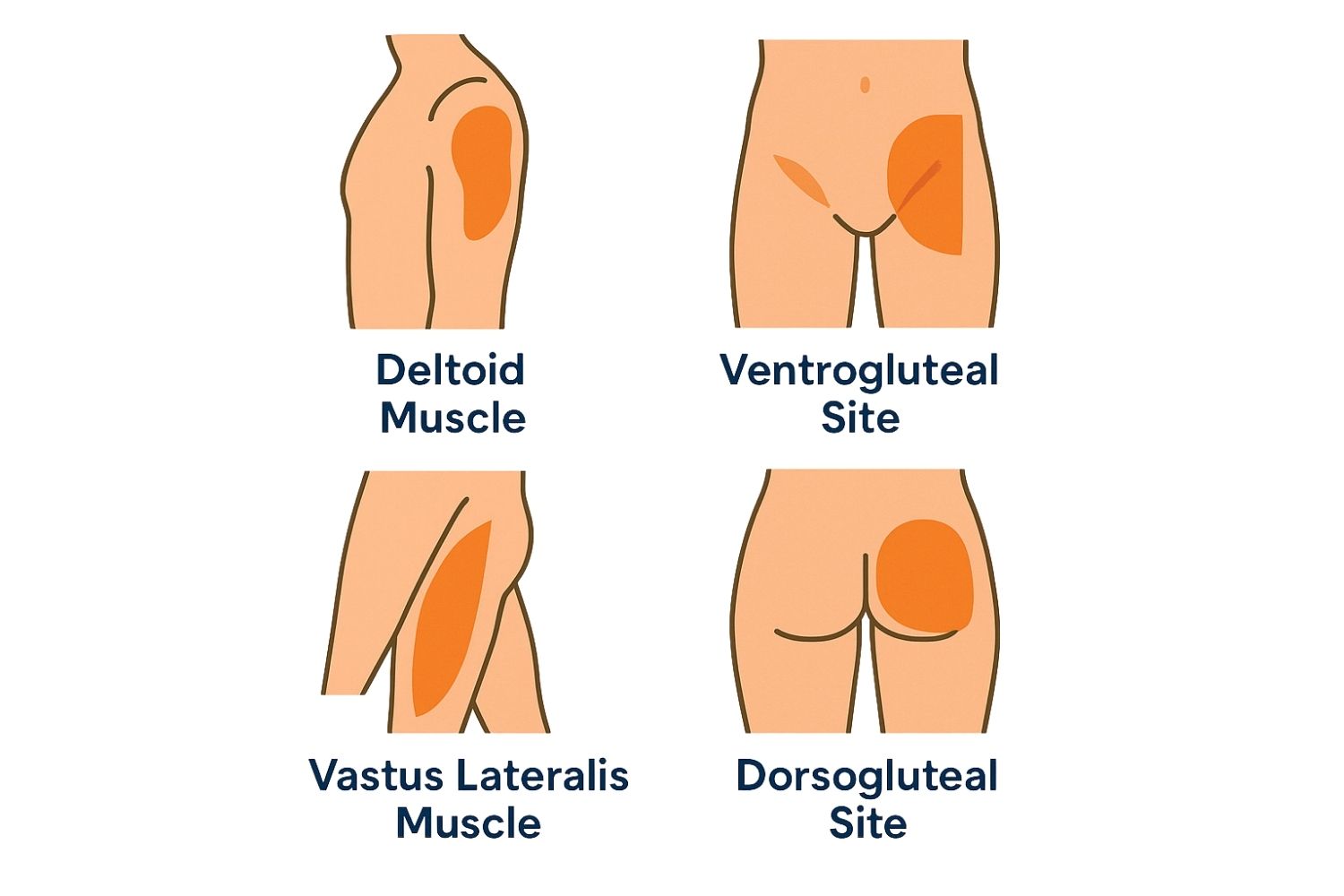
There are two primary gluteal muscle injection sites discussed in medical education. Each has distinct anatomical landmarks and training considerations.
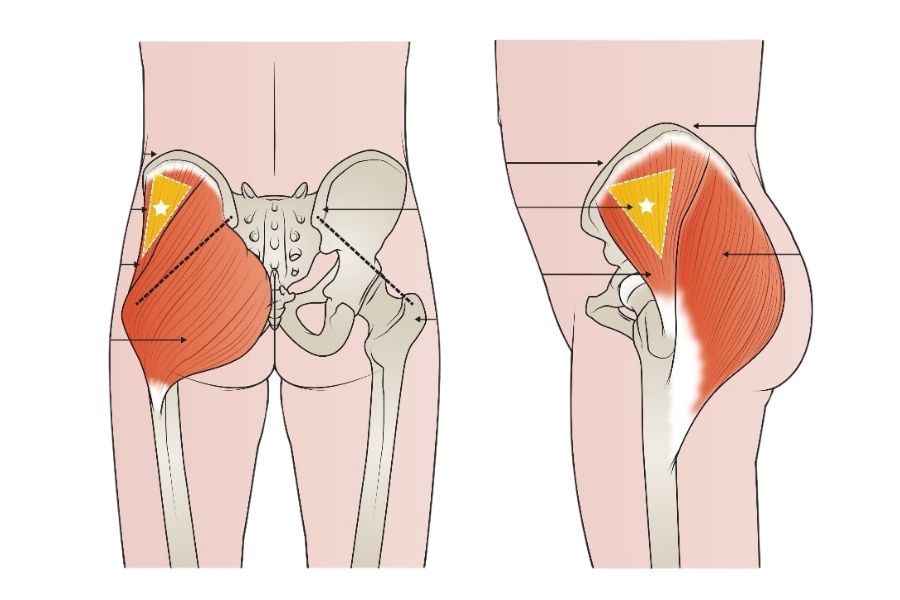
Dorsogluteal Injection Site
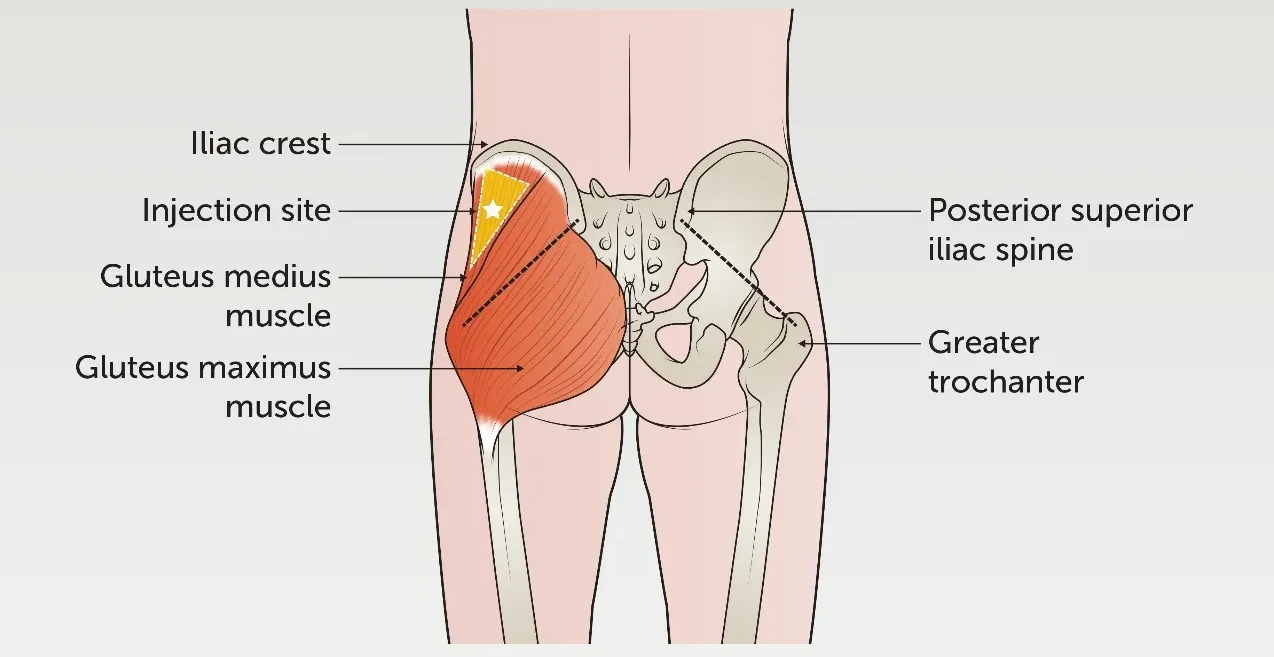
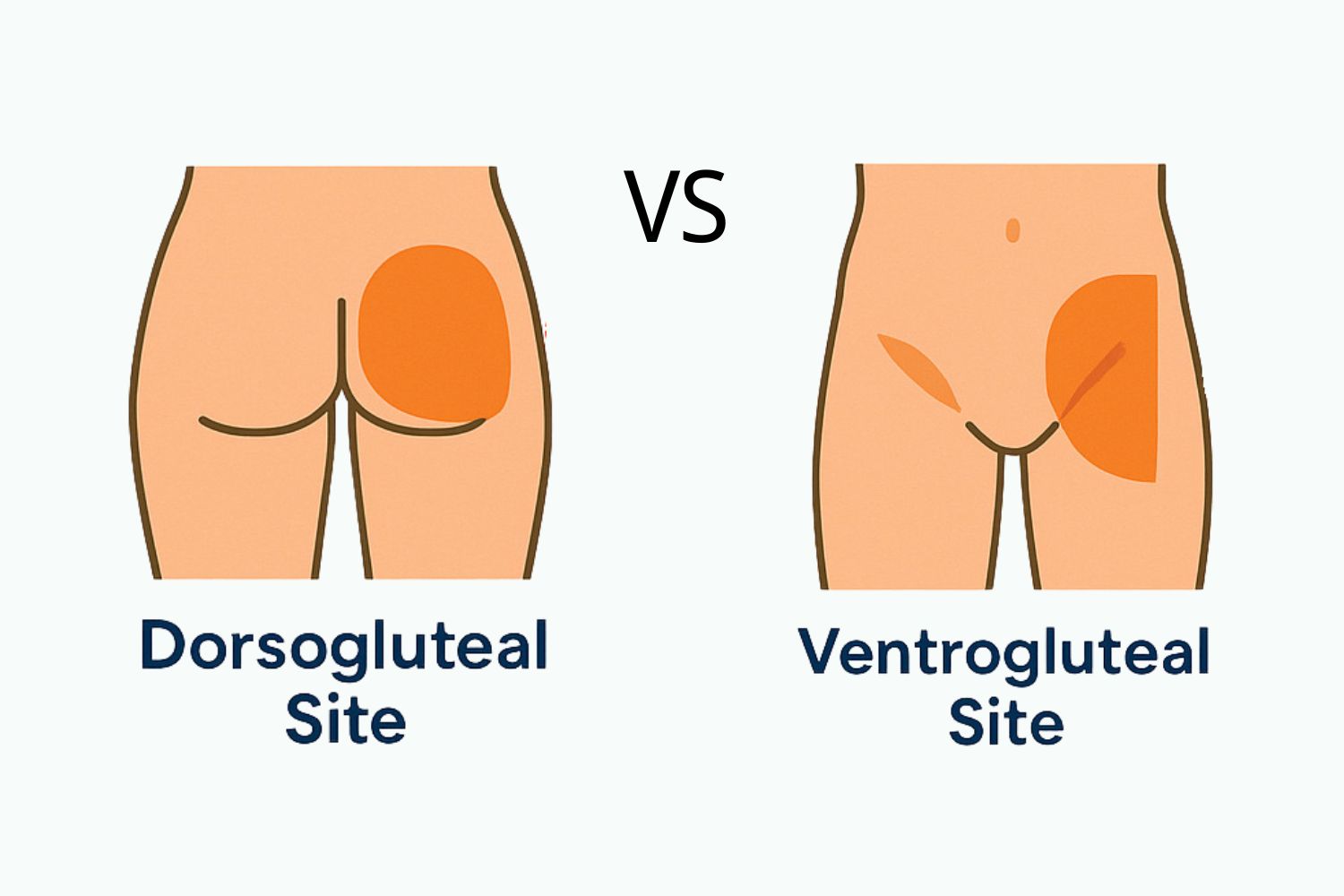
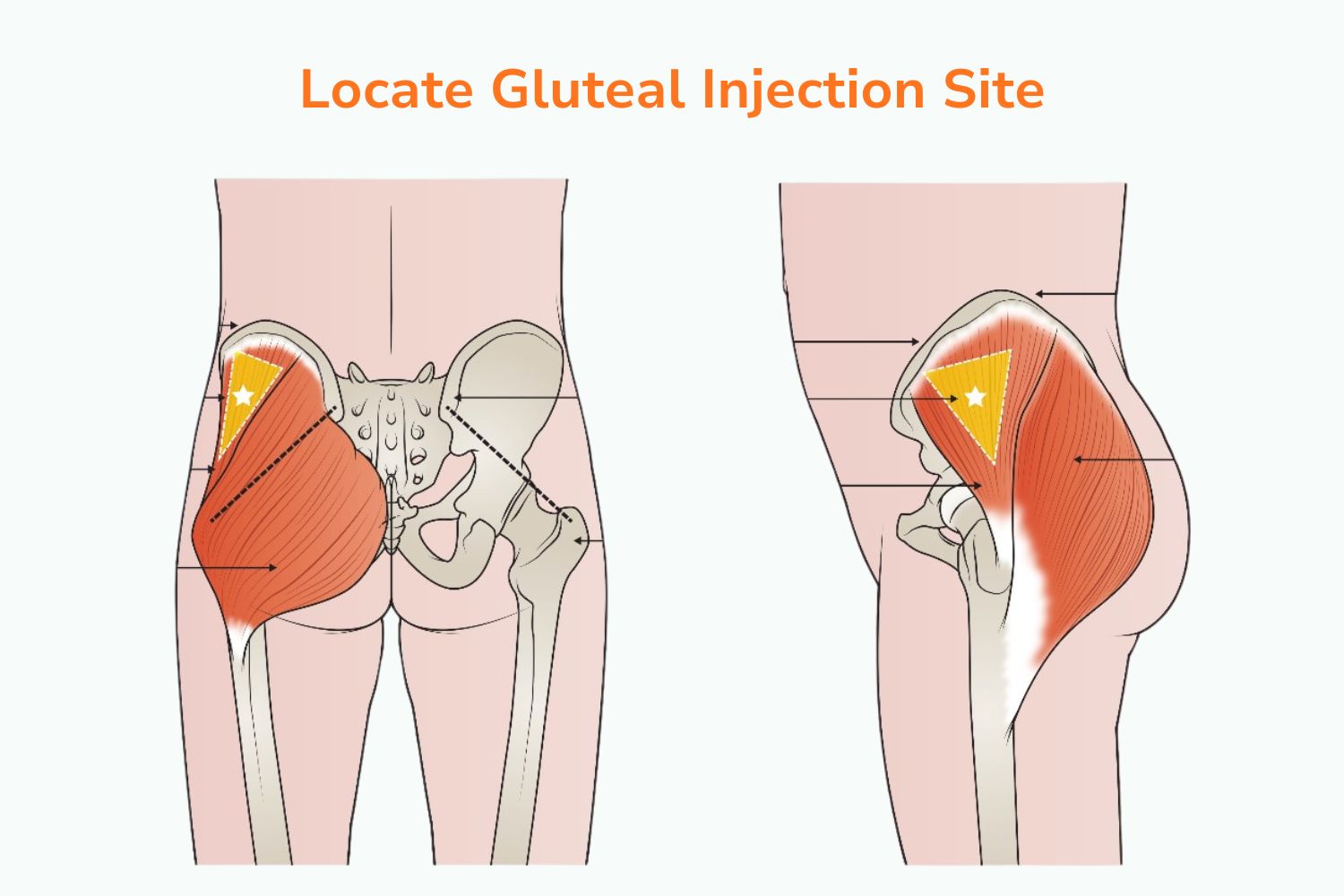
The dorsogluteal injection site is located in the upper outer quadrant of the buttock and involves the gluteus maximus muscle. It has been widely taught in traditional injection training for decades and is still referenced in many textbooks and exams.
Because of its historical use, many learners encounter this site early in their education. Understanding where it is and how it is identified remains important for foundational knowledge.
Ventrogluteal Injection Site
The ventrogluteal injection site is located on the lateral hip, targeting the gluteus medius and minimus muscles. This area is defined by clear bony landmarks and is widely taught in modern injection training programs.
Its location on the hip makes landmark-based identification especially useful during practice, particularly when learners are first developing spatial awareness of injection sites.
How to Find the Correct Gluteal IM Injection Spot
Accurate site identification relies on anatomical landmarks, not visual estimation. This approach improves consistency and reduces placement errors.
General Landmarks for Gluteal Injection Sites
Key landmarks used when identifying gluteal injection sites include:
- The iliac crest
- The greater trochanter of the femur
- The natural contours of the lateral hip
For ventrogluteal injections in particular, landmark-based positioning helps learners reliably locate the intended muscle area across different body types.
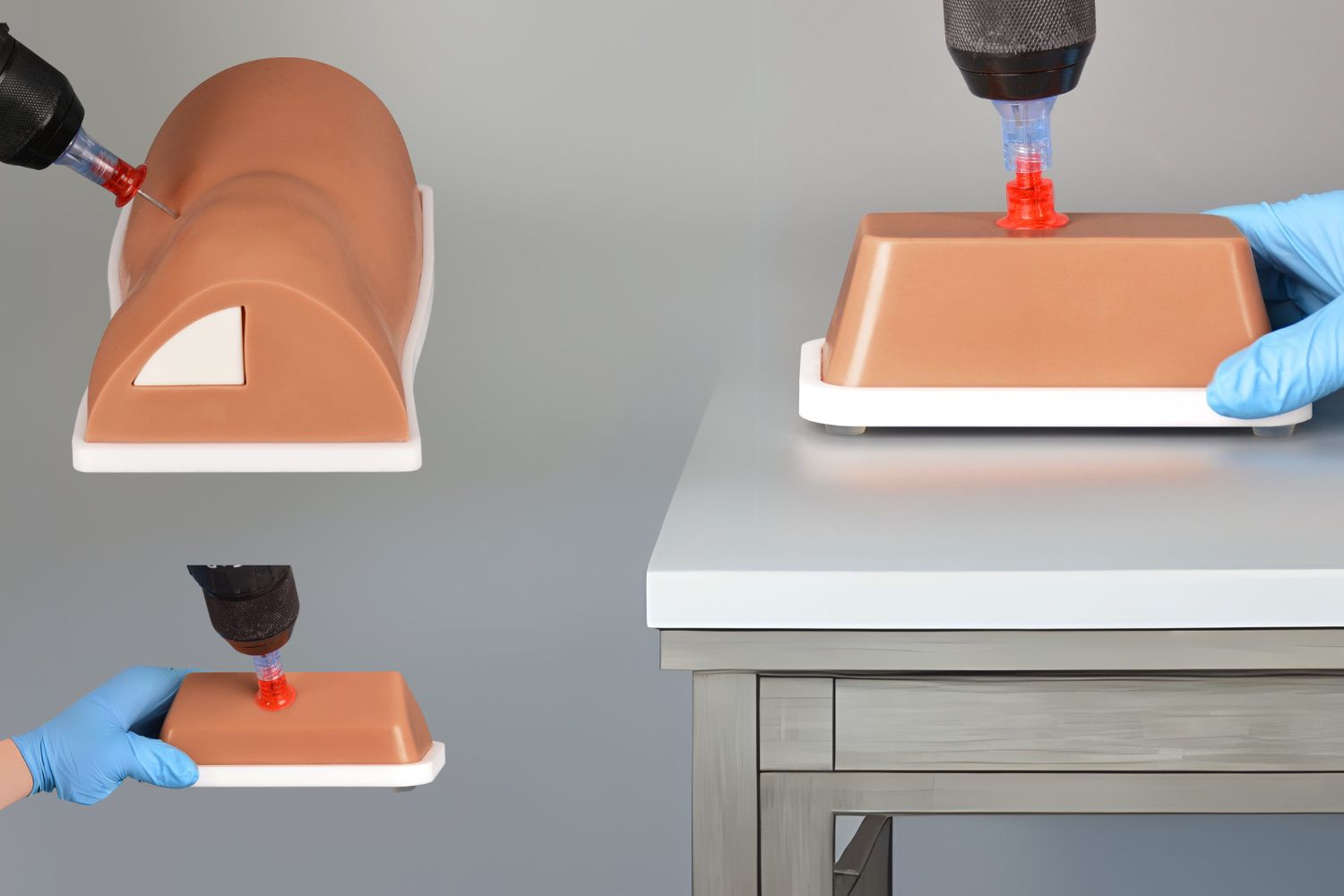
In training environments, models that clearly mark these landmarks can significantly shorten the learning curve. For example, a hip injection trainer with visible anatomical landmarks allows learners to practice locating the ventrogluteal site repeatedly and accurately before working with real patients.
👉 Example: a ventrogluteal-focused gluteal intramuscular injection model designed for landmark-guided IM injection practice.
Common Mistakes When Locating Gluteal Injection Sites
Some of the most common errors seen during training include:
- Relying on visual estimation instead of landmarks
- Confusing hip and posterior gluteal anatomy
- Placing the injection too low or too medial
- Skipping site verification under time pressure
These mistakes are common among beginners and highlight why structured practice with clear landmarks is emphasized in modern education.
Who Needs to Learn Gluteal Injection Site Identification?
Gluteal injection site identification is a core skill for:
- Nursing students and educators
- Medical and allied health programs
- Clinical skills labs and simulation centers
- Patient education and counseling scenarios
In all of these settings, repeated hands-on practice improves accuracy and confidence far more effectively than diagrams alone.
In clinical training, learners often notice that dorsogluteal and ventrogluteal injection sites are taught differently. A separate guide explains these differences in more detail, including anatomical considerations and practical use.
👉 Dorsogluteal vs Ventrogluteal Injection Sites
FAQ – Gluteal Injection Sites
Q1: How many gluteal injection sites are there?
There are two primary gluteal injection sites commonly taught in medical education: the dorsogluteal and ventrogluteal sites. Each uses different anatomical landmarks.
Q2: How do you find the gluteal injection spot accurately?
The most reliable method is using anatomical landmarks such as the iliac crest and greater trochanter, rather than estimating by visual appearance alone.
Q3: What is the most commonly taught gluteal injection site?
Both sites are taught in training programs, though teaching emphasis may vary by institution, curriculum, and regional guidelines.
Q4: Can beginners practice gluteal injection sites without patients?
Yes. A simulation buttock IM injection trainer with clearly marked landmarks allow learners to practice site identification and injection technique safely before clinical application.
.jpg?w=1600&h=1600)
.jpg?w=1600&h=1600)
.jpeg?w=1600&h=1600)
.jpeg?w=1600&h=1600)
.jpeg?w=1500&h=1500)
.jpeg?w=1500&h=1500)

.jpeg?w=1500&h=1500)
.jpg?w=1600&h=1600)
.jpg?w=1600&h=1600)
.jpeg?w=1000&h=1000)
.jpeg?w=1000&h=1000)
.jpeg?w=800&h=800)
.jpeg?w=1500&h=1500)
.jpeg?w=1500&h=1500)
.jpeg?w=1500&h=1500)
.jpg?w=1500&h=1500)
.jpg?w=1500&h=1500)
.jpeg?w=1500&h=1500)
.jpeg?w=1500&h=1500)
.jpg?w=1600&h=1600)
.jpg?w=1600&h=1600)
.jpeg?w=1000&h=1000)
.jpeg?w=1000&h=1000)