
Peripheral intravenous (IV) catheter insertion in neonates is uniquely challenging due to small vein size, fragile vessel walls, and limited subcutaneous tissue support.
Selecting the right vein is critical for successful cannulation, minimizing complications, and ensuring stable IV access for premature or ill infants.
This guide outlines the preferred peripheral IV sites in neonates and infants, explaining why certain veins are chosen and when alternatives should be considered in clinical practice.
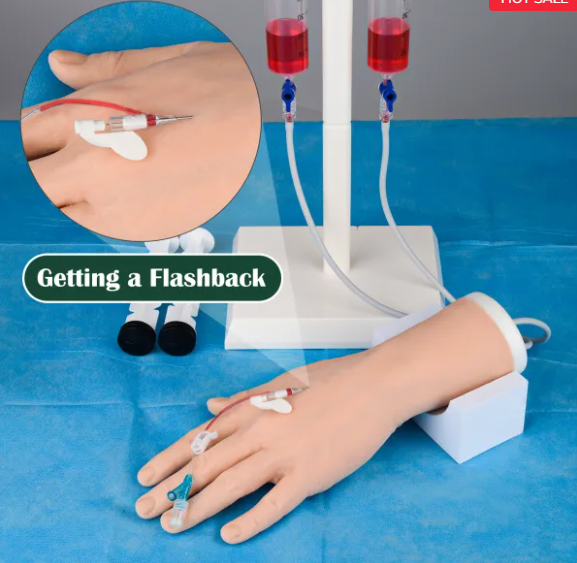
1. Hand Veins – Dorsal Venous Arch & Cephalic Vein
Preferred first-line sites in many neonates
Dorsal venous arch
- Easily visualized on the back of the hand
- Simple to splint and monitor
- Infiltration and extravasation are quickly detected
Cephalic vein
- Often larger and better palpated than visualized
- Particularly suitable for larger infants
- Provides relatively stable and longer-lasting access
👉 Training focus: hand positioning, gentle palpation, and stabilization
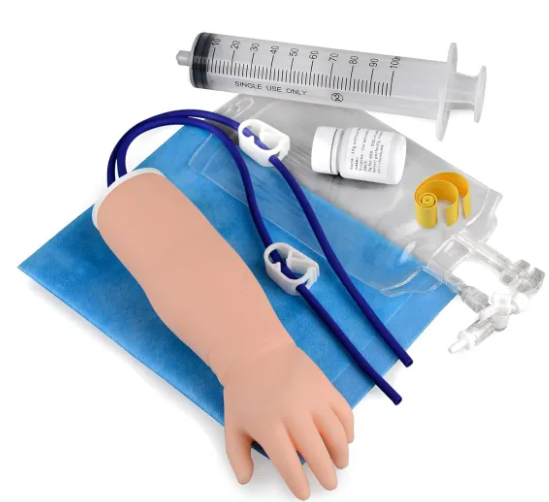
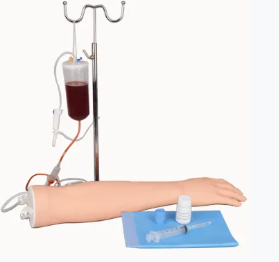
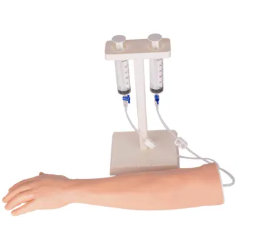
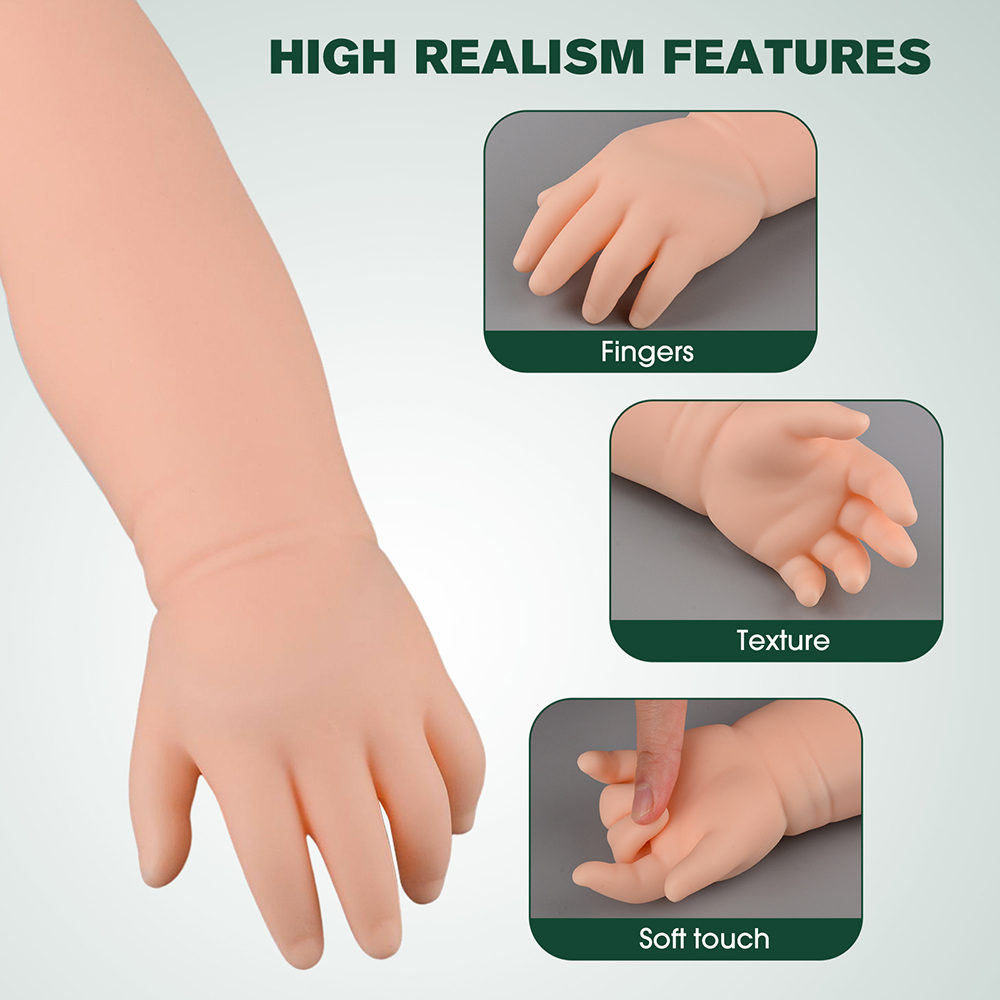
👉 Relevant practice kits: pediatric IV hand & arm simulators
 |
 |
 |
2. Wrist Veins (Volar Aspect)
- Veins on the volar wrist are usually visible and accessible
- Cannulation is technically easier
- However, catheter longevity is limited due to frequent movement
⚠ Often used for short-term IV access rather than prolonged therapy.
3. Cubital Fossa – Median Cubital, Cephalic & Basilic Veins
- Larger veins that are easier to cannulate
- Commonly used for IV insertion and venipuncture in older infants
⚠ Clinical caution:
- Median nerve and brachial artery are in close proximity
- Increased risk of nerve or arterial injury
This site requires excellent anatomical knowledge and controlled technique, making it ideal for simulation-based training before clinical application.
4. Foot Veins – Dorsal Venous Arch & Saphenous Vein
Dorsal venous arch
- Small but surprisingly reliable
- Easy to stabilize when properly secured
Saphenous vein (anterior to medial malleolus)
- Straight, consistent anatomical location
- Long-lasting IV access
- Often used for peripherally inserted central catheters (PICCs)
⚠ Should be avoided if long-term venous access may be required later.
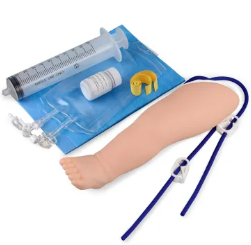
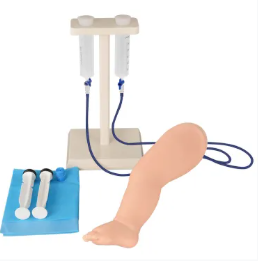
👉 Relevant practice kits: pediatric IV leg practice kit, infant foot IV simulators
5. Leg – Saphenous Vein at the Knee
- Similar characteristics to the distal saphenous vein
- Larger caliber and relatively stable
- Useful when upper extremity access is limited
Proper limb positioning and vein stabilization are essential for success.
6. Scalp Veins – Superficial Temporal Vein
Considered a last-resort peripheral IV site
- Used only after other sites are exhausted
- Partial scalp shaving is often required
- The superficial temporal vein runs anterior to the ear
- Palpable in most infants within 5–8 cm
When well secured, scalp IVs can last a long time, but they should be avoided in infants who may later require long-term central access.
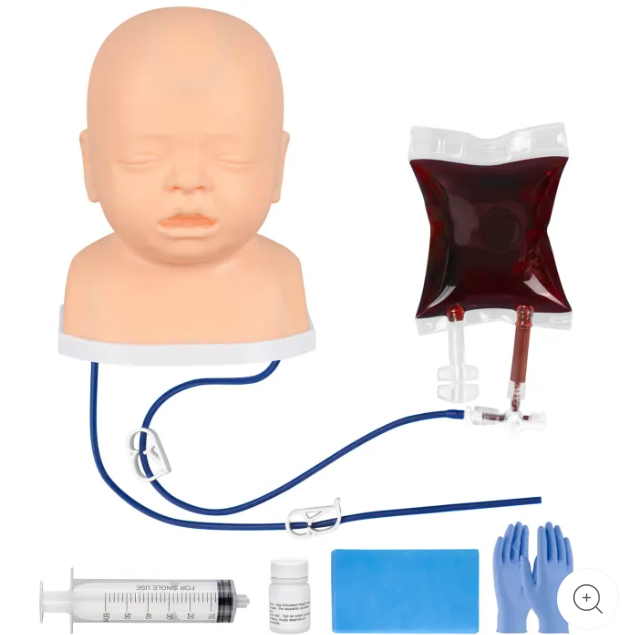
👉 Relevant practice kits: infant scalp vein IV head trainer
Why Simulation Training Matters for Neonatal IV Insertion
Neonatal IV insertion demands precision, anatomical familiarity, and confidence, yet real clinical opportunities for repeated practice are limited.
Using realistic pediatric IV simulators with anatomically accurate vein placement allows nursing students, nurses, and clinicians to:
- Practice vein identification without patient risk
- Improve catheter control and insertion angle
- Gain confidence before neonatal clinical placement
Well-designed pediatric IV arm, leg, hand/foot, and scalp models help bridge the gap between theory and real-world neonatal care.
Related Articles:
.jpg?w=1600&h=1600)
.jpg?w=1600&h=1600)
.jpeg?w=1600&h=1600)
.jpeg?w=1600&h=1600)
.jpeg?w=1500&h=1500)
.jpeg?w=1500&h=1500)
.jpeg?w=1500&h=1500)
.jpg?w=1600&h=1600)
.jpg?w=1600&h=1600)
.jpeg?w=1000&h=1000)
.jpeg?w=1000&h=1000)
.jpeg?w=800&h=800)
.jpeg?w=1500&h=1500)
.jpeg?w=1500&h=1500)
.jpeg?w=1500&h=1500)
.jpg?w=1500&h=1500)
.jpg?w=1500&h=1500)
.jpeg?w=1500&h=1500)
.jpeg?w=1500&h=1500)
.jpg?w=1600&h=1600)
.jpg?w=1600&h=1600)
.jpeg?w=1000&h=1000)
.jpeg?w=1000&h=1000)