
Venipuncture on the arm and hand is the most commonly performed method for blood collection and peripheral IV access. These areas provide accessible veins, predictable anatomy, and a lower risk of complications compared with other sites.
This guide focuses specifically on upper-limb venipuncture, helping students and healthcare professionals understand where to start, how to choose between sites, and how practice improves accuracy.
Why the Arm and Hand Are Preferred for Venipuncture
- Superficial, easily palpable veins
- Stable anatomy with predictable landmarks
- Lower infection and complication risk
- Suitable for both blood draw and IV access
For beginners, mastering arm and hand venipuncture forms the foundation for more advanced IV skills.
Common Venipuncture Sites on the Arm
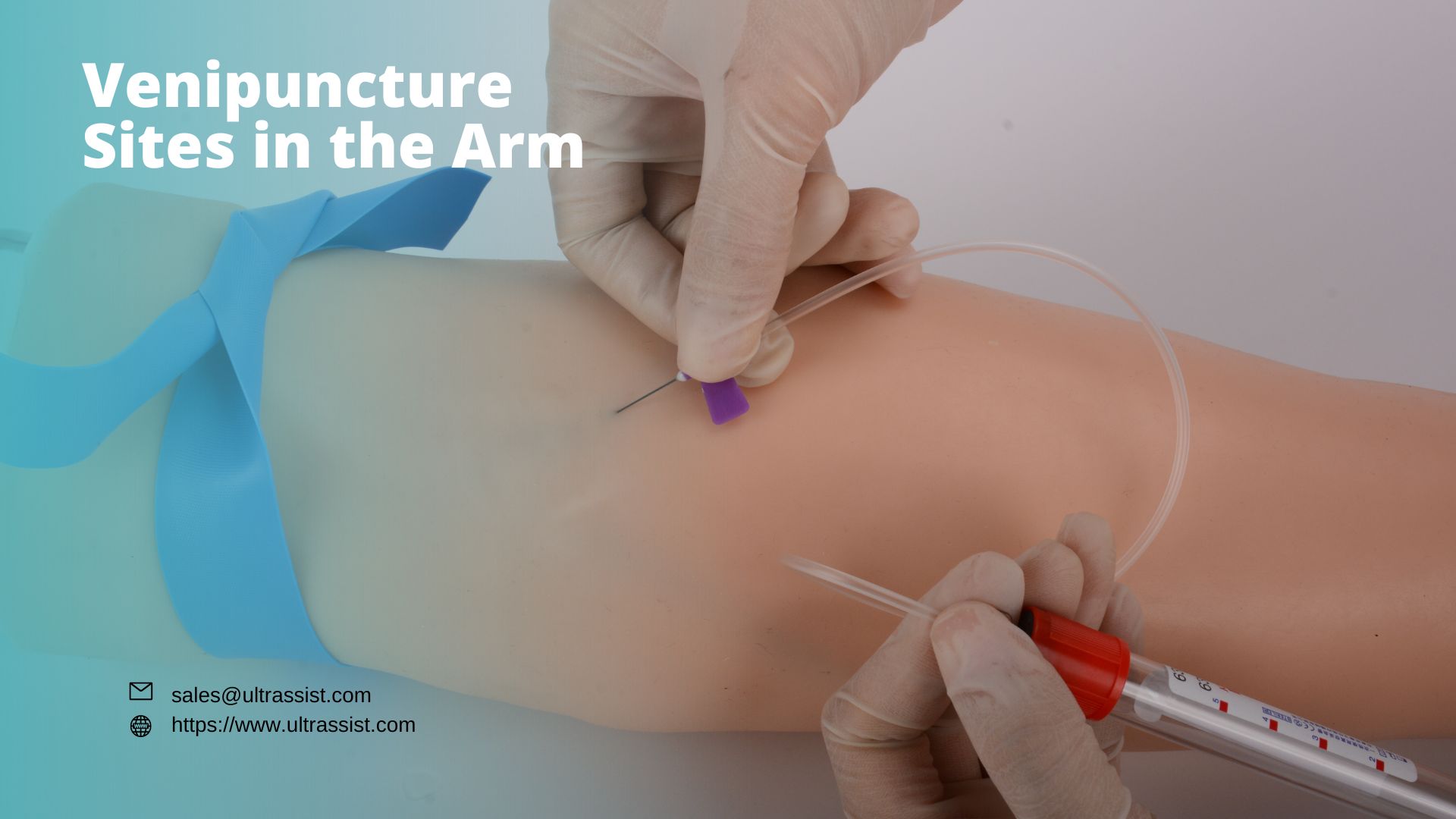
1. Median Cubital Vein (First Choice)
Located in the antecubital fossa, this vein is typically large, well anchored, and easy to access.
Why beginners start here:
- Minimal rolling
- Consistent anatomy
- Higher first-attempt success rate
This vein is often the first site practiced on adult phlebotomy practice arms to develop vein palpation and needle control.
2. Cephalic Vein
Running along the lateral side of the arm, the cephalic vein is a common alternative when the median cubital vein is unavailable.
Clinical considerations:
- Easier to see than palpate
- More prone to rolling
- Requires steadier anchoring technique
3. Basilic Vein
Situated on the medial side of the arm, the basilic vein is usually larger but deeper.
Use with caution:
- Close to arteries and nerves
- Less stable
- Not ideal for beginners
This site is better approached after gaining confidence with superficial veins.
Forearm Venipuncture Sites
Forearm veins are often used when antecubital access is unsuitable or when repeated access is required.
Advantages:
- Longer vein segments
- Less movement at joints
- Useful for both venipuncture and IV therapy
Practicing forearm access helps trainees learn depth control and vein tracking.
Venipuncture Sites on the Hand
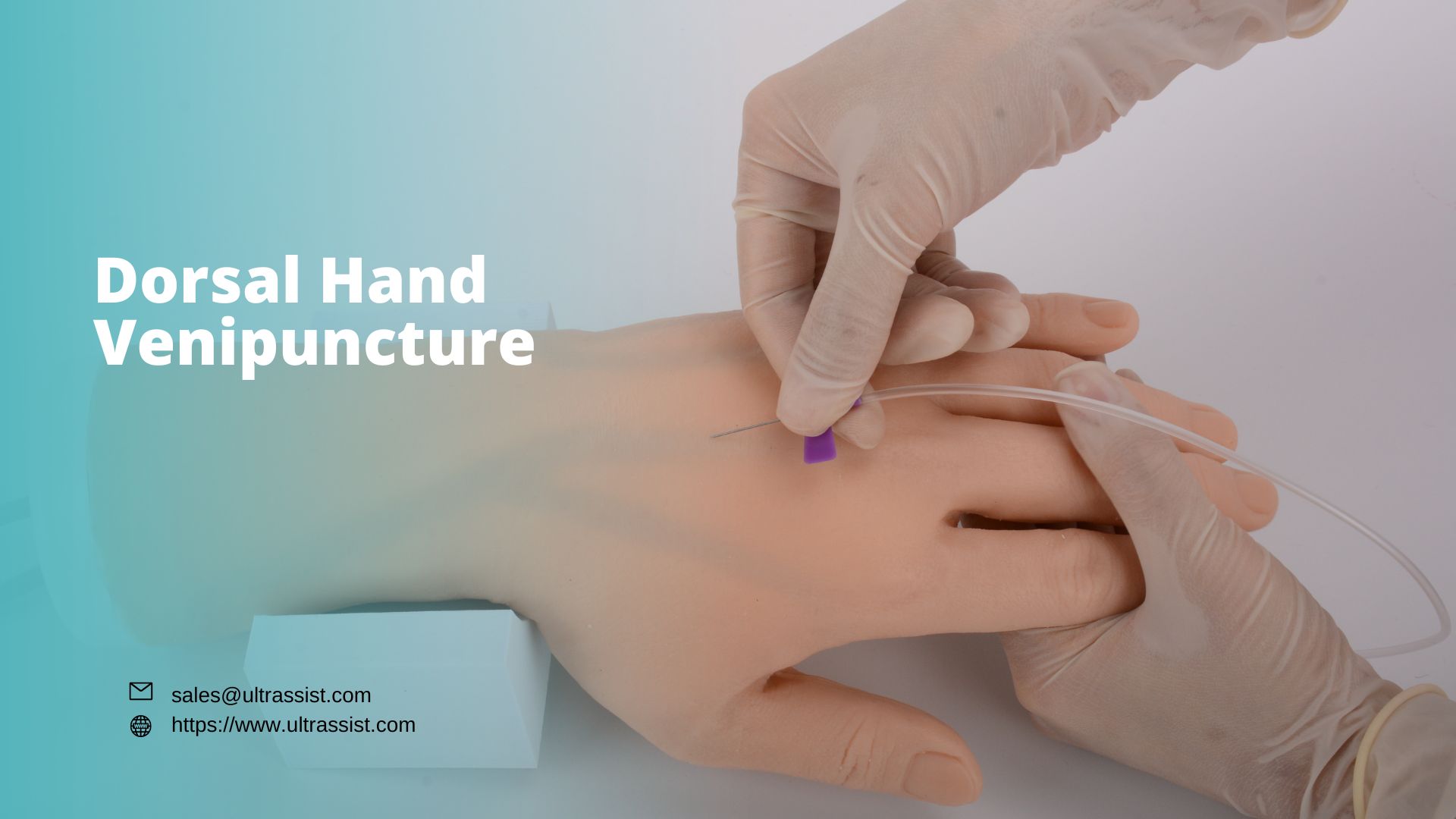
Dorsal Hand Veins
Located on the back of the hand, these veins are commonly used when arm veins are difficult to access.
Key points:
- More visible, smaller diameter
- Higher discomfort for patients
- Increased infiltration risk
Hand venipuncture is typically considered a secondary option, especially for blood draws.
Arm vs. Hand: How to Choose
- Start with the arm whenever possible
- Use the hand only when arm veins are inaccessible
- Prioritize vein stability over visibility
- Consider patient comfort and movement
Understanding this hierarchy is critical for consistent success.
Improving Venipuncture Skills Through Practice
Successful venipuncture depends on:
- Accurate vein selection
- Proper needle angle and depth
- Controlled hand positioning
Simulation practice allows learners to repeat these steps safely, helping them recognize vein behavior before working with real patients.
Key Takeaways
- Arm veins are the first choice for venipuncture
- Median cubital vein offers the highest success rate
- Hand veins are a secondary option
- Structured practice improves confidence and accuracy
Related Articles:
.jpg?w=1600&h=1600)
.jpg?w=1600&h=1600)
.jpeg?w=1600&h=1600)
.jpeg?w=1600&h=1600)
.jpeg?w=1500&h=1500)
.jpeg?w=1500&h=1500)
.jpeg?w=1500&h=1500)
.jpg?w=1600&h=1600)
.jpg?w=1600&h=1600)
.jpeg?w=1000&h=1000)
.jpeg?w=1000&h=1000)
.jpeg?w=800&h=800)
.jpeg?w=1500&h=1500)
.jpeg?w=1500&h=1500)
.jpeg?w=1500&h=1500)
.jpg?w=1500&h=1500)
.jpg?w=1500&h=1500)
.jpeg?w=1500&h=1500)
.jpeg?w=1500&h=1500)
.jpg?w=1600&h=1600)
.jpg?w=1600&h=1600)
.jpeg?w=1000&h=1000)
.jpeg?w=1000&h=1000)