
Enhancing venipuncture skills comes down to one core principle: consistent, structured practice that builds confidence, control, and clinical judgment. While understanding anatomy and technique is essential, true proficiency develops through repetition, feedback, and realistic training, especially before working with real patients.
Venipuncture is a foundational clinical skill used across blood collection, IV therapy, and diagnostic procedures. For nursing students, phlebotomy trainees, and early-career clinicians, improving success rates requires more than memorizing steps, it requires developing reliable muscle memory and vein assessment ability.
Core Principles for Improving Venipuncture Technique
Rather than focusing on isolated steps, skilled practitioners rely on a combination of preparation, control, and adaptability.
Patient and Limb Positioning
Proper positioning stabilizes veins and minimizes unnecessary movement. A relaxed arm, supported at heart level, improves vein palpation and reduces the likelihood of vein rolling during insertion.
Controlled Needle Entry
Maintaining a consistent insertion angle, typically shallow and deliberate, helps practitioners develop precision and reduces tissue trauma. The goal is not speed, but controlled entry and smooth advancement.
Vein Assessment Skills
Successful venipuncture begins before the needle touches the skin. Improving palpation skills allows clinicians to identify vein direction, depth, and resilience, even when veins are not visually prominent.
Sensory Feedback Awareness
Experienced practitioners rely heavily on tactile feedback. Recognizing subtle resistance changes during insertion comes only through repeated, hands-on practice rather than theory alone.
Why Repetition Matters More Than Memorization
Many learners struggle with venipuncture not because they lack knowledge, but because they lack enough safe practice opportunities. Real patients allow limited attempts, which makes early mistakes stressful and confidence-shaking.
This is where structured simulation becomes essential.
Using realistic venipuncture and IV practice kits allows learners to:
- Practice needle control without pressure
- Repeat insertions until movements feel natural
- Learn from mistakes without patient risk
- Build confidence before clinical placement
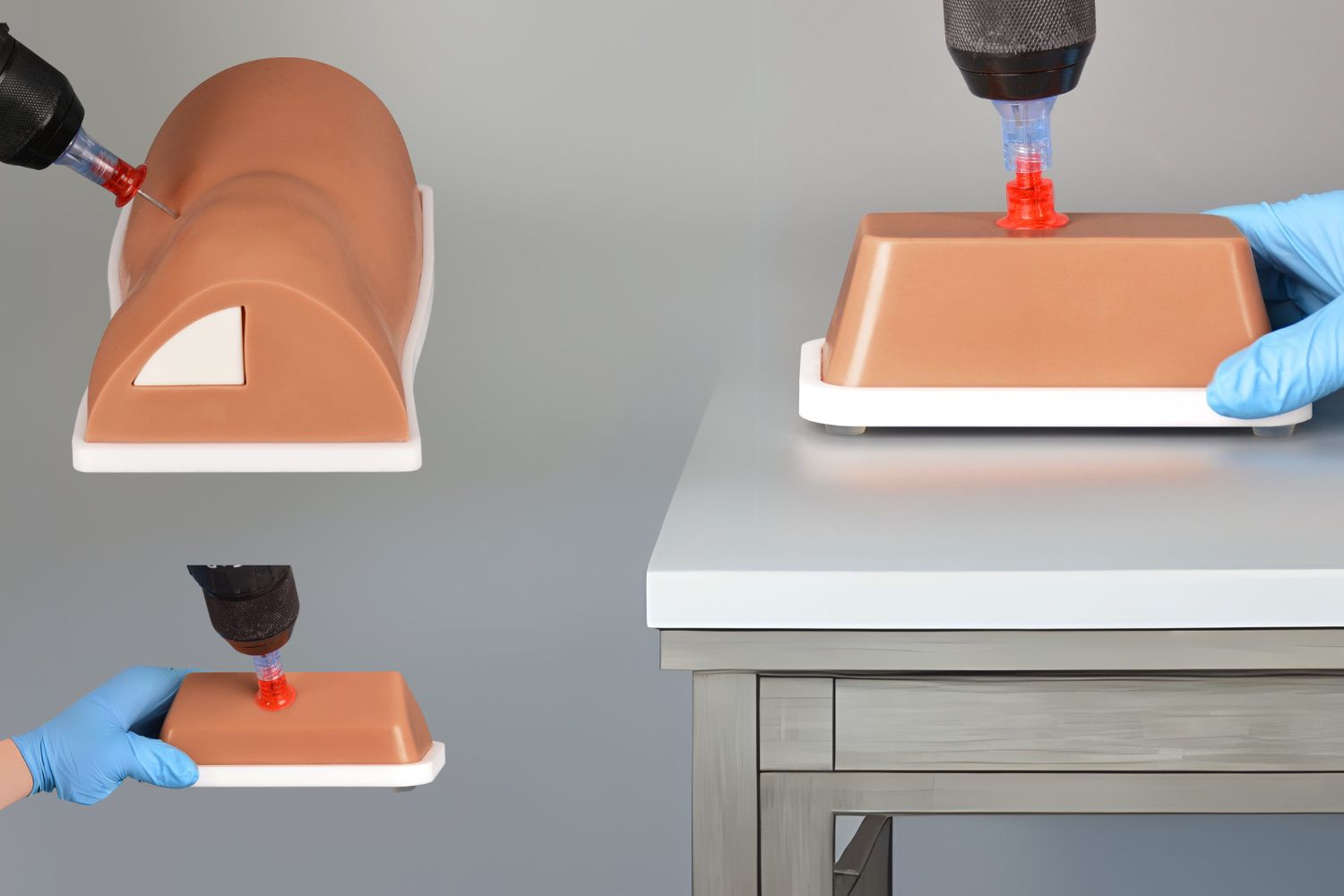
Well-designed training kits simulate skin resistance, vein elasticity, and needle feedback—bridging the gap between classroom learning and real-world application.
Overcoming Common Venipuncture Challenges Through Training
Skill development accelerates when practice reflects real clinical difficulty.
Limited or Difficult Vein Access
Some scenarios require refined palpation and insertion control. Training on models with less prominent or deeper veins helps practitioners learn to rely on touch rather than sight alone.
Consistency and Hand Stability
Shaky hands and inconsistent angles are common among beginners. Repetitive practice on training models improves fine motor control and hand-eye coordination over time.
Building Confidence Under Pressure
Confidence directly impacts success rates. Practicing in a low-stress environment allows learners to internalize technique, reducing hesitation during real procedures.
Flexible Practice with Portable Training Solutions
Portable venipuncture training kits make it easier to maintain skill consistency outside formal labs. These compact models are ideal for:
- Independent skill refreshers
- Short practice sessions between classes or shifts
- Classroom demonstrations and group training
By integrating portable practice into regular routines, learners can reinforce skills without relying solely on scheduled lab access.
Turning Practice into Clinical Readiness
Improving venipuncture skills is a gradual process. The most effective learners combine anatomical knowledge with repetitive, realistic simulation to develop confidence and precision.
Training tools such as IV and venipuncture practice kits are not substitutes for clinical experience, but they are powerful preparation tools that reduce anxiety, shorten learning curves, and improve first-attempt success rates when transitioning to patient care.
With consistent practice and the right training approach, venipuncture becomes not just a task, but a dependable clinical skill.
Related Articles:
.jpg?w=1600&h=1600)
.jpg?w=1600&h=1600)
.jpeg?w=1600&h=1600)
.jpeg?w=1600&h=1600)
.jpeg?w=1500&h=1500)
.jpeg?w=1500&h=1500)
.jpeg?w=1500&h=1500)
.jpg?w=1600&h=1600)
.jpg?w=1600&h=1600)
.jpeg?w=1000&h=1000)
.jpeg?w=1000&h=1000)
.jpeg?w=800&h=800)
.jpeg?w=1500&h=1500)
.jpeg?w=1500&h=1500)
.jpeg?w=1500&h=1500)
.jpg?w=1500&h=1500)
.jpg?w=1500&h=1500)
.jpeg?w=1500&h=1500)
.jpeg?w=1500&h=1500)
.jpg?w=1600&h=1600)
.jpg?w=1600&h=1600)
.jpeg?w=1000&h=1000)
.jpeg?w=1000&h=1000)