What is a Granulation Wound?
A granulation wound refers to the stage in the healing process when new tissue - called granulation tissue - begins to form over a wound bed. This tissue appears red or pink, moist, and grainy in texture, representing new capillary growth and collagen formation. It's the body's natural repair system taking action, rebuilding the damaged area from the inside out.
Granulation is a positive sign that the wound is healing properly. However, it's also a delicate stage - new tissue is fragile and must be protected from infection and trauma.
Stages of Wound Healing and Granulation
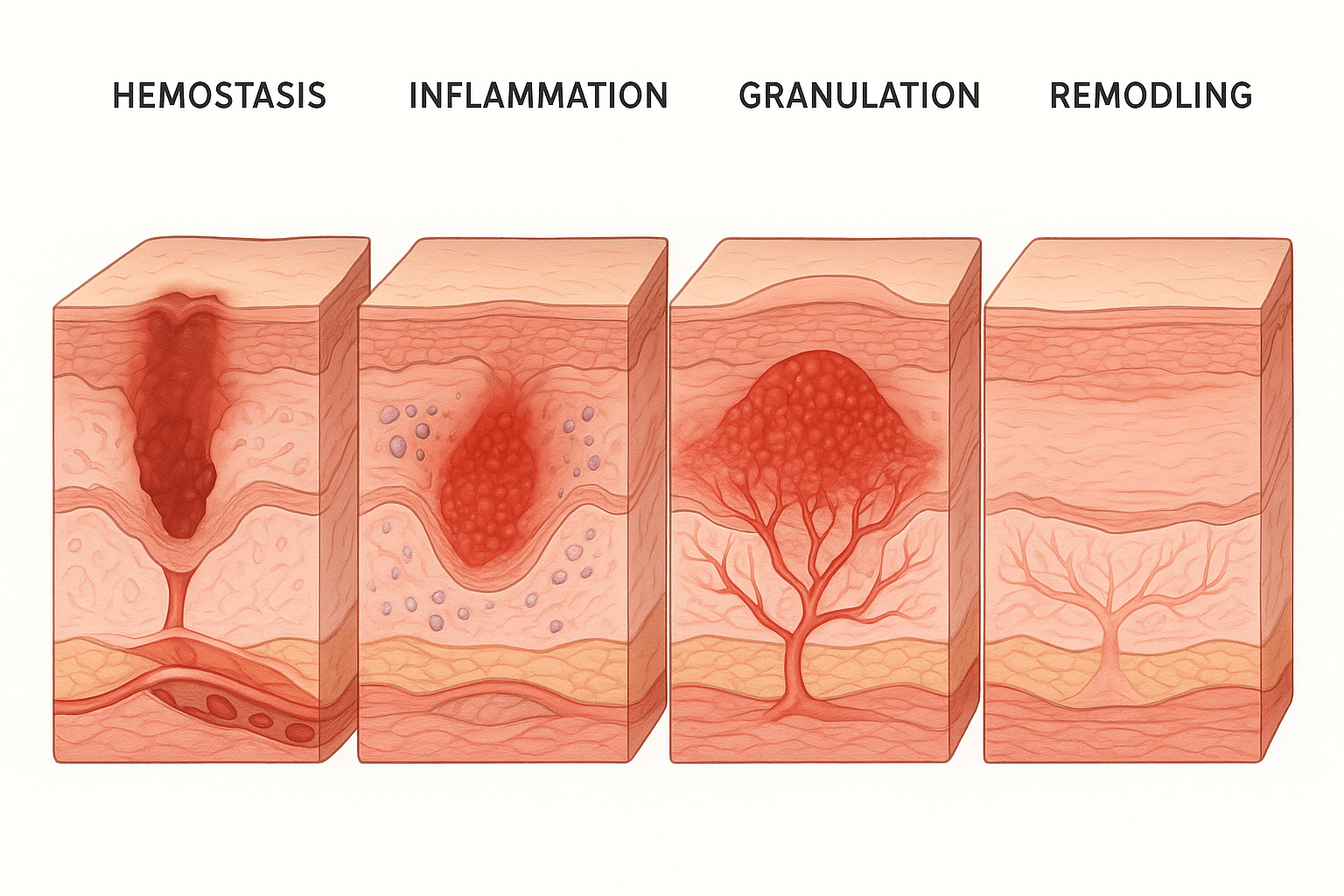
The process of wound healing occurs in four overlapping stages:
-
Hemostasis: Immediately after injury, blood vessels constrict to stop bleeding, and clot formation begins.
-
Inflammation: White blood cells move to the area to fight infection and clear debris.
-
Granulation (Proliferation): This is when the wound bed fills with granulation tissue — rich in new blood vessels, fibroblasts, and extracellular matrix.
-
Remodeling (Maturation): The new tissue strengthens, and the wound edges contract to close completely.
During the granulation stage, the wound should look moist and reddish, with small, bumpy granules. Pale or dark-colored tissue can indicate poor oxygenation or infection, which needs medical attention.
How to Care for a Granulation Wound
Proper wound care during this phase promotes healthy tissue growth and prevents setbacks. Key steps include:
-
Keep the wound moist, not wet. Use sterile, non-stick dressings that maintain moisture while preventing maceration.
-
Avoid disrupting new tissue. When changing dressings, use gentle irrigation and avoid rubbing the wound bed.
-
Monitor for infection. Redness, odor, or discharge may signal bacterial growth.
-
Promote circulation. Adequate nutrition, hydration, and oxygenation support healing at the cellular level.
-
Use protective coverings. Dressings such as hydrocolloids or foam pads protect fragile tissue from external friction and contamination.
Healthcare professionals and students can benefit from using realistic Granulation Tissue Wound Models to understand what healthy granulation tissue looks like in different stages. Practicing wound assessment and dressing techniques on lifelike models builds confidence and accuracy in clinical training.
Training with Granulation Tissue Wound Models
Each model in the Granulation Tissue Wound Model Set (Set of 4) represents a distinct stage of wound healing—from early granulation to near-epithelialization. The silicone-based material provides realistic texture and color differentiation, helping trainees visualize tissue progression and select appropriate dressing types.
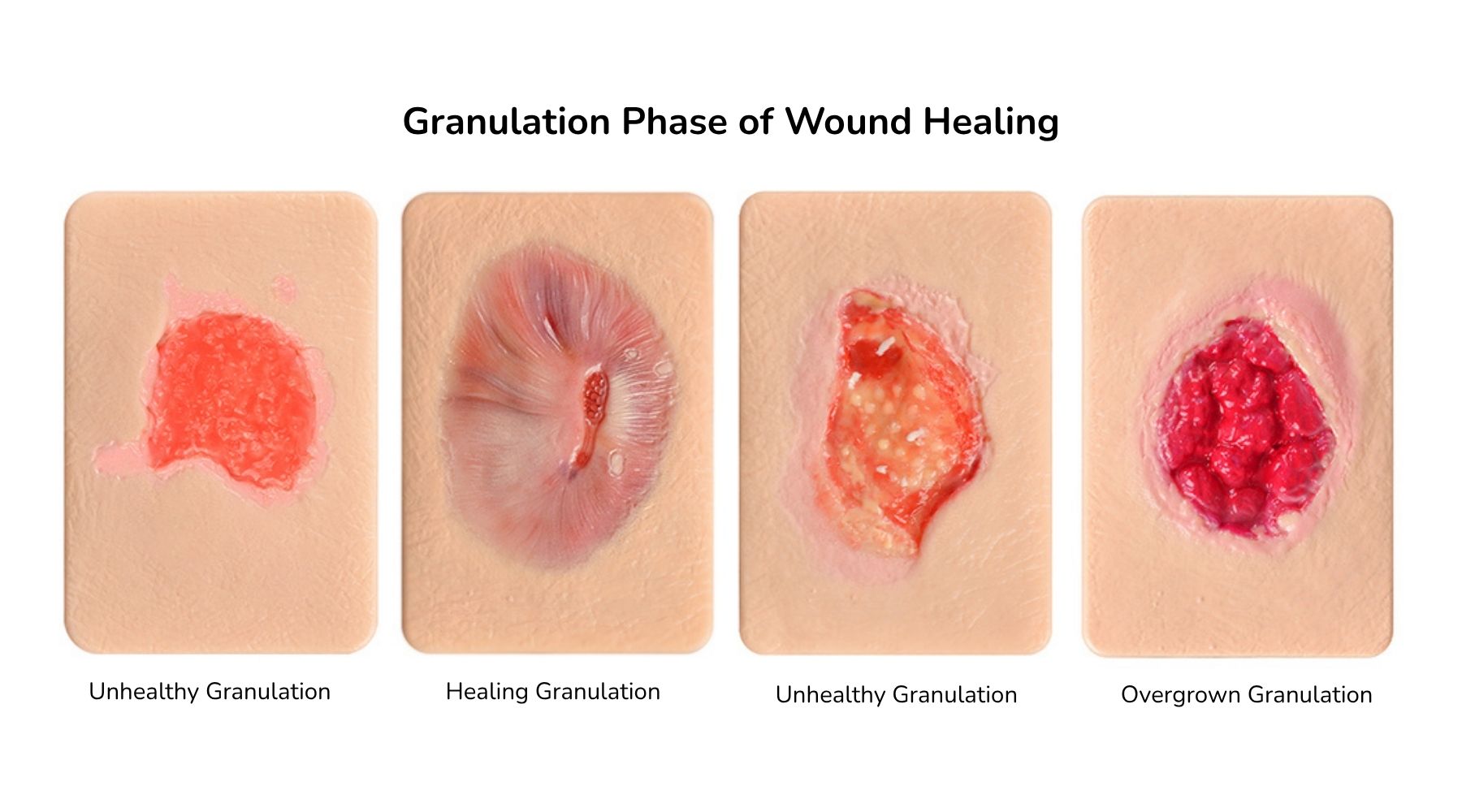
Ideal for nursing schools, clinical workshops, and wound-care certification programs, this set enables repeated practice of wound assessment, cleaning, and dressing application in a controlled environment—bridging the gap between theory and real patient care.
Why Understanding Granulation Matters
Recognizing and properly managing the granulation stage is essential for preventing chronic wounds. Mismanagement - such as overly dry dressings or excessive cleaning - can destroy new tissue and delay healing. With adequate knowledge and practical exposure, clinicians ensure that every wound heals efficiently and safely.
Granulation tissue represents hope - the body rebuilding itself, layer by layer. For students and practitioners, mastering this stage means mastering one of the most vital aspects of wound care.
.jpeg?w=1000&h=1000)
.jpg?w=1500&h=1500)
.jpg?w=1500&h=1500)
.jpeg?w=1500&h=1500)
.jpeg?w=1600&h=1600)
.jpeg?w=1600&h=1600)
.jpeg?w=1000&h=1000)
.jpeg?w=1000&h=1000)
.jpeg?w=1000&h=1000)
.jpeg?w=1000&h=1000)
.jpg?w=1600&h=1600)
.jpg?w=1600&h=1600)
.jpeg?w=1000&h=1000)