.jpg?w=1500&h=1500&q=80)
.jpg?w=1500&h=1500&q=80)
.jpg?w=1500&h=1500&q=80)
.jpg?w=1500&h=1500&q=80)
.jpg?w=1500&h=1500&q=80)
.jpg?w=1500&h=1500&q=80)
.jpg?w=1500&h=1500&q=80)
.jpg?w=1500&h=1500&q=80)
.jpg?w=1500&h=1500&q=80)
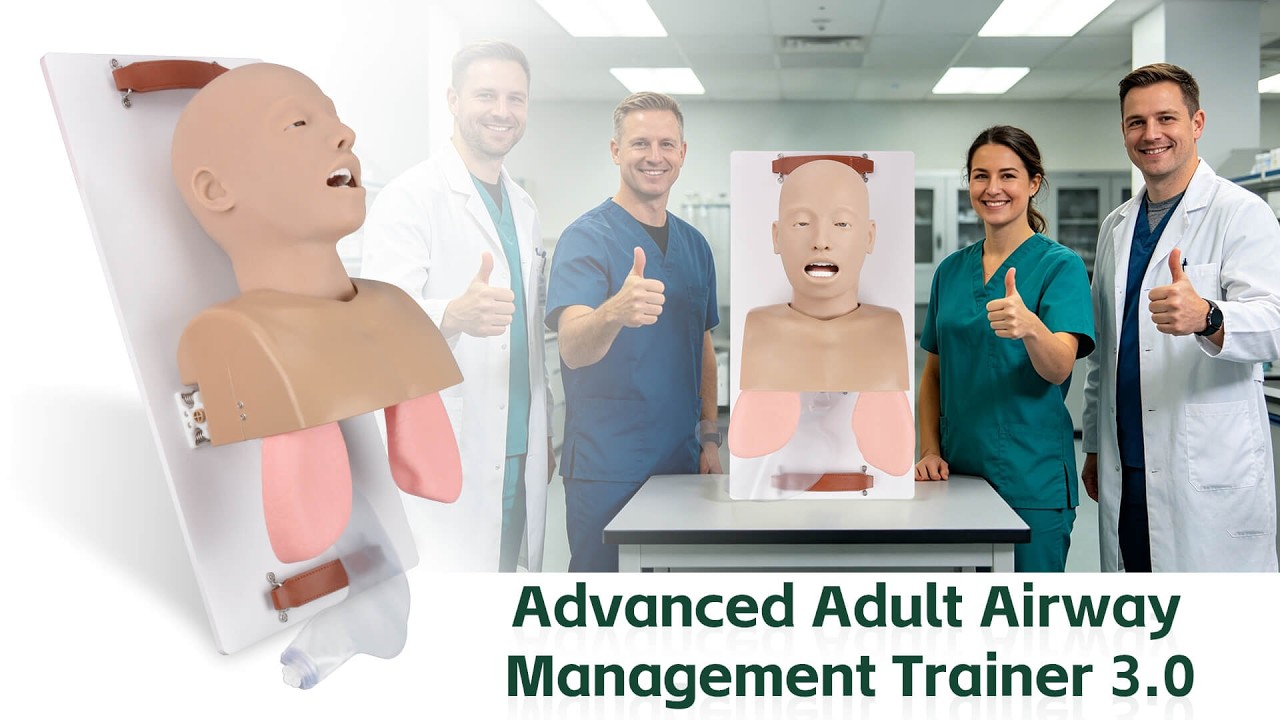
Maniquí avanzado para el manejo de las vías respiratorias en adultos
Preguntas frecuentes sobre envíos y devoluciones
Shipment
1. ¿Cuánto cuesta el envío?
Los costos de envío dependen del destino y del peso del producto. Puedes ver el costo final de envío al realizar el pago. El costo se calcula automáticamente en tiempo real.
2. ¿Cuándo se enviará mi pedido?
Los artículos en stock generalmente se procesan y envían dentro de 1–3 días hábiles después de que se confirme el pago. Si un artículo está temporalmente fuera de stock, nos pondremos en contacto contigo con un cronograma actualizado.
3. ¿De dónde envían?
Enviamos desde el almacén disponible más cercano siempre que sea posible, incluyendo nuestro almacén en EE. UU. Si no hay stock local disponible, tu pedido puede enviarse desde nuestro almacén principal en China.
4. ¿Cuánto tiempo tomará la entrega?
Los tiempos estimados de entrega son:
-
Envío local en EE. UU.: 3–5 días
-
Envío internacional estándar: 8–20 días hábiles
El despacho de aduanas o las ubicaciones remotas pueden requerir tiempo adicional. El envío exprés puede estar disponible a solicitud.
5. ¿Cómo puedo rastrear mi pedido?
Una vez que tu pedido se envíe, te enviaremos un número de seguimiento por correo electrónico. El seguimiento puede tardar de 1 a 2 días en activarse después del despacho.
Rastrea tu pedido: https://www.17track.net/en
Devoluciones y Reembolsos
1. ¿Cuál es su política de devoluciones?
Las devoluciones o reembolsos están disponibles dentro de los 7 días posteriores a la recepción de tu pedido si el producto está sin usar, en su estado original y tiene un problema de calidad.
Si recibiste el producto correcto y no hay problema de calidad, no aceptamos devoluciones ni reembolsos.
2. ¿Qué pasa si recibo un artículo dañado o incorrecto?
Por favor, contáctanos tan pronto como sea posible después de la entrega con tu recibo de pedido o número de pedido y fotos o videos que muestren el problema del producto o paquete. Revisaremos el problema y organizaremos un intercambio o solución apropiada.
3. ¿Cómo solicito una devolución o reemplazo?
Por favor, contacta a nuestro equipo de servicio al cliente con tu recibo de pedido o prueba de compra y fotos o videos que muestren el problema. Revisaremos tu solicitud y te guiaremos a través de los siguientes pasos.
Envíanos un correo: sales@ultrassist.com
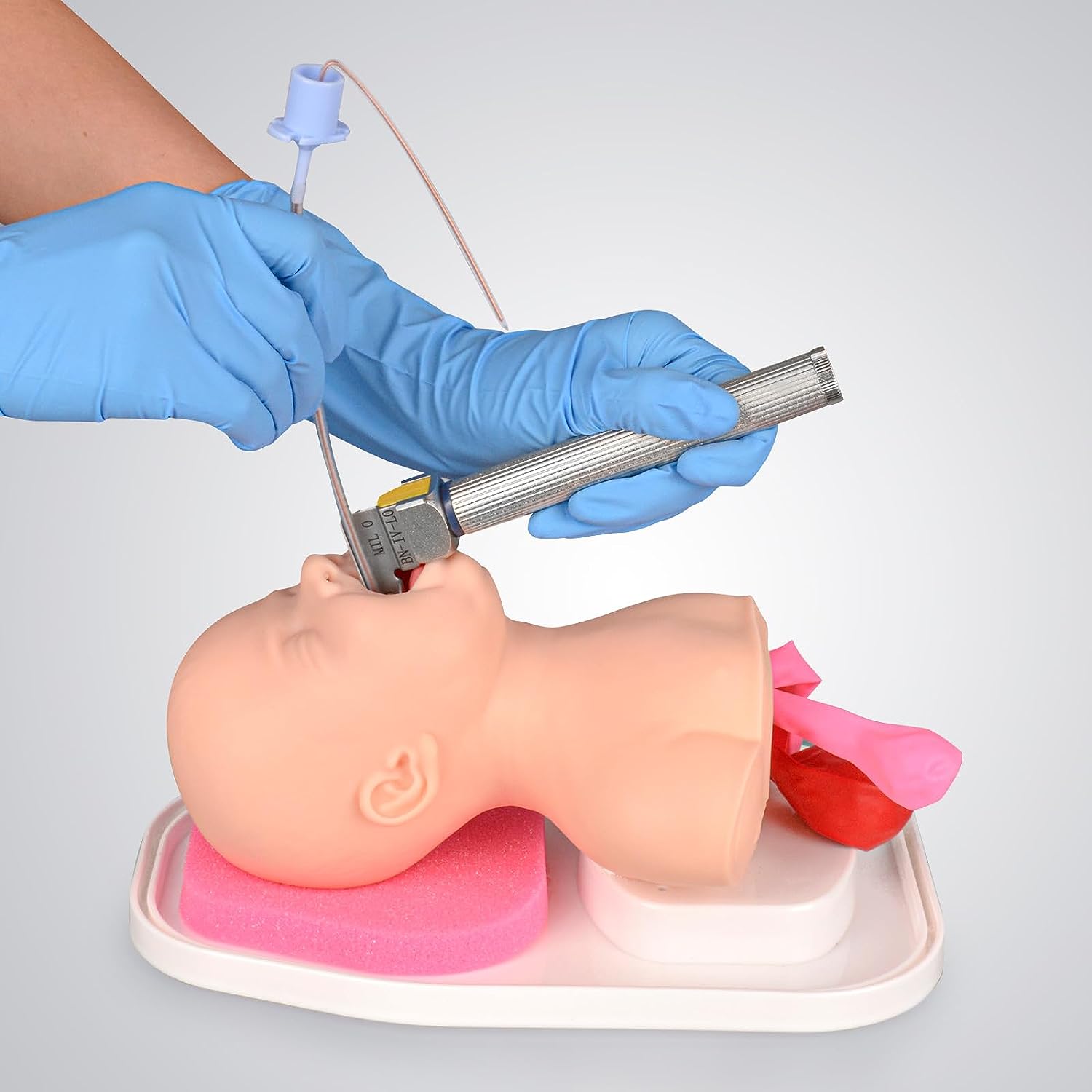
El maniquí avanzado para la gestión de vías respiratorias en adultos está diseñado para un entrenamiento integral en la gestión de vías respiratorias en adultos, cubriendo habilidades rutinarias de vías respiratorias, manejo de vías respiratorias difíciles y escenarios de emergencia. Proporciona práctica realista con aditamentos para vías respiratorias, intubación, ventilación, succión y técnicas de emergencia para vías respiratorias.
El maniquí presenta condiciones de vía respiratoria ajustables basadas en la clasificación de Cormack-Lehane, junto con hinchazón de la lengua, estrechamiento glótico, laringoespasmo y movimiento restringido del cuello. Estas condiciones ajustables permiten a los instructores crear diferentes niveles de dificultad en las vías respiratorias para un entrenamiento progresivo de habilidades. La inflación visible de los pulmones proporciona retroalimentación inmediata durante la práctica de ventilación sin componentes electrónicos.
Características clave
- Entrenamiento integral de vías respiratorias en adultos
Soporta la práctica de intubación endotraqueal oral y nasal, inserción de OPA y NPA, colocación de vías respiratorias supraglóticas, ventilación BVM, succión y presión cricoidea.
- Condiciones de vía respiratoria difícil ajustables
Los instructores pueden crear escenarios de vía respiratoria progresivamente desafiantes utilizando las calificaciones de Cormack-Lehane, hinchazón de la lengua, estrechamiento glótico, laringoespasmo y movimiento cervical restringido.
- Anatomía de vías respiratorias realista y retroalimentación táctil
La vía respiratoria incluye estructuras anatómicas clave como la epiglotis, úvula, cuerdas vocales y cornetes nasales. La resistencia del tejido realista proporciona retroalimentación práctica durante los procedimientos de vía respiratoria.
- Retroalimentación visible de ventilación
Los pulmones se inflan y desinflan visiblemente durante la ventilación BVM, proporcionando una clara indicación visual durante la práctica de vías respiratorias y ventilación.
- Entrenamiento en escenarios de emergencia de vías respiratorias
El maniquí soporta la simulación de vómitos y manejo de aspiración, así como la práctica de presión cricoidea para el entrenamiento de emergencia de vías respiratorias.
- Posicionamiento ajustable de cabeza y cuello
La cabeza se puede posicionar para diferentes escenarios de gestión de vías respiratorias, incluyendo movimiento restringido del cuello, permitiendo a los aprendices practicar la gestión de vías respiratorias en condiciones más desafiantes.
Aplicaciones de entrenamiento
Este maniquí es adecuado para escuelas de medicina, programas de enfermería, entrenamiento de EMS, hospitales y centros de simulación. Puede ser utilizado para instrucción en el aula, laboratorios de habilidades clínicas, entrenamiento basado en simulación, práctica de vías respiratorias difíciles, entrenamiento de respuesta a emergencias y evaluación de habilidades.
Especificaciones:
- SKU: UA06013
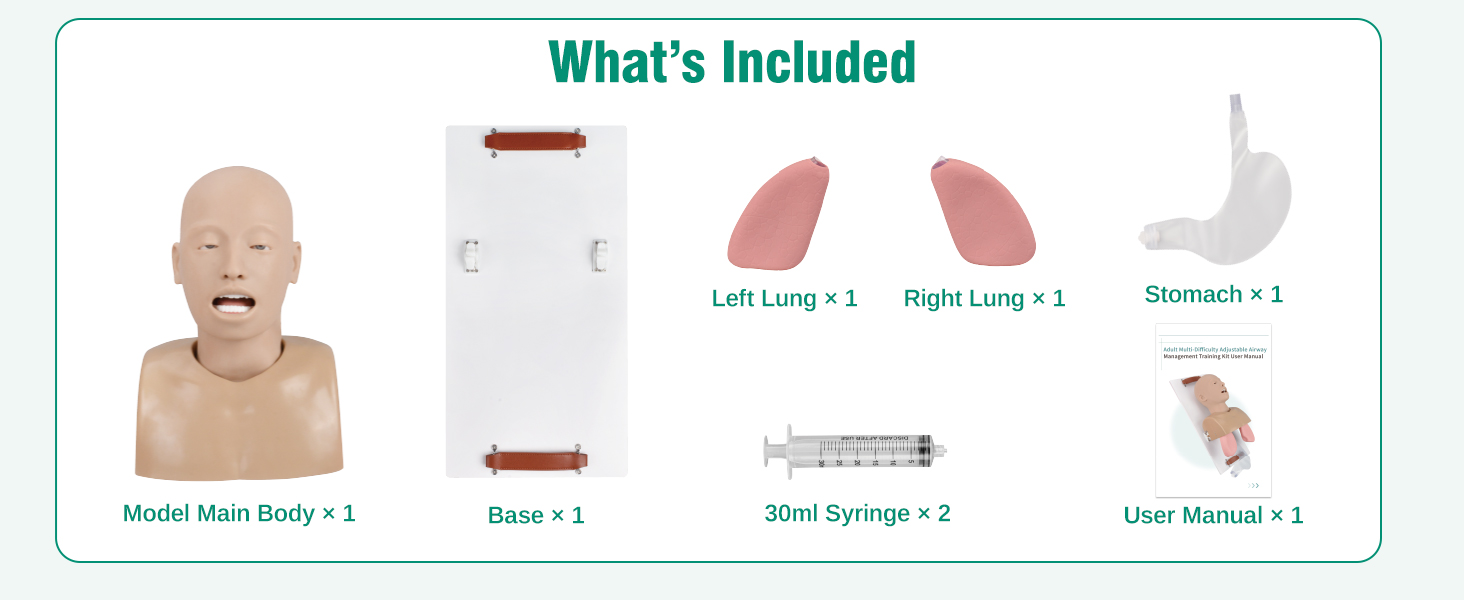
- Incluye: Maniquí avanzado para vías respiratorias en adultos x1, tabla de soporte x1, kit de limpieza
El manual de entrenamiento proporciona instrucciones detalladas para el ensamblaje, operación, ajuste de vías respiratorias difíciles, limpieza, mantenimiento, almacenamiento y solución de problemas.
Pedidos procesados en 1–3 días hábiles
Entrega mundial con seguimiento; tarifas mostradas al finalizar la compra
Tarjetas, PayPal, Apple Pay, Google Pay y T/T
Precios especiales para múltiples unidades
Productos personalizados según su diseño, muestra o requisitos
Soporte para problemas de productos y devoluciones y cambios elegibles
Obtenga precios para pedidos al por mayor o personalizados
Soporte antes y después de la compra
_1445x.jpg?w=1500&h=1500&q=80)
_1445x.jpg?w=1500&h=1500&q=80)
_1445x.jpg?w=1500&h=1500&q=80)
_1445x.jpg?w=1500&h=1500&q=80)
_1445x.jpg?w=1500&h=1500&q=80)
_1445x.jpg?w=1500&h=1500&q=80)
_1445x.jpg?w=1500&h=1500&q=80)
_1445x.jpg?w=1500&h=1500&q=80)
_1445x.jpg?w=1500&h=1500&q=80)
.jpg?w=1500&h=1500)
.jpg?w=1500&h=1500)
.jpeg?w=1000&h=1000)
.jpeg?w=1000&h=1000)
.jpeg?w=1500&h=1500)
.jpg?w=1600&h=1600)
.jpg?w=1600&h=1600)
.jpeg?w=1600&h=1600)
.jpeg?w=1600&h=1600)
.jpeg?w=1000&h=1000)
.jpeg?w=1000&h=1000)
.jpeg?w=1000&h=1000)
.jpeg?w=1000&h=1000)