
Cervical dilation and effacement are essential signs of labor progression. Whether you're a medical student, midwife, doula, or an expectant parent curious about the birthing process, understanding how to assess these changes is a vital skill in obstetrics.
While healthcare professionals perform vaginal examinations to determine these changes, students and trainees can build their confidence through structured simulation. In this guide, we'll explain how to check dilation and effacement using fingers - and how training models can support accurate, hands-on learning.
What Are Cervical Dilation and Effacement?
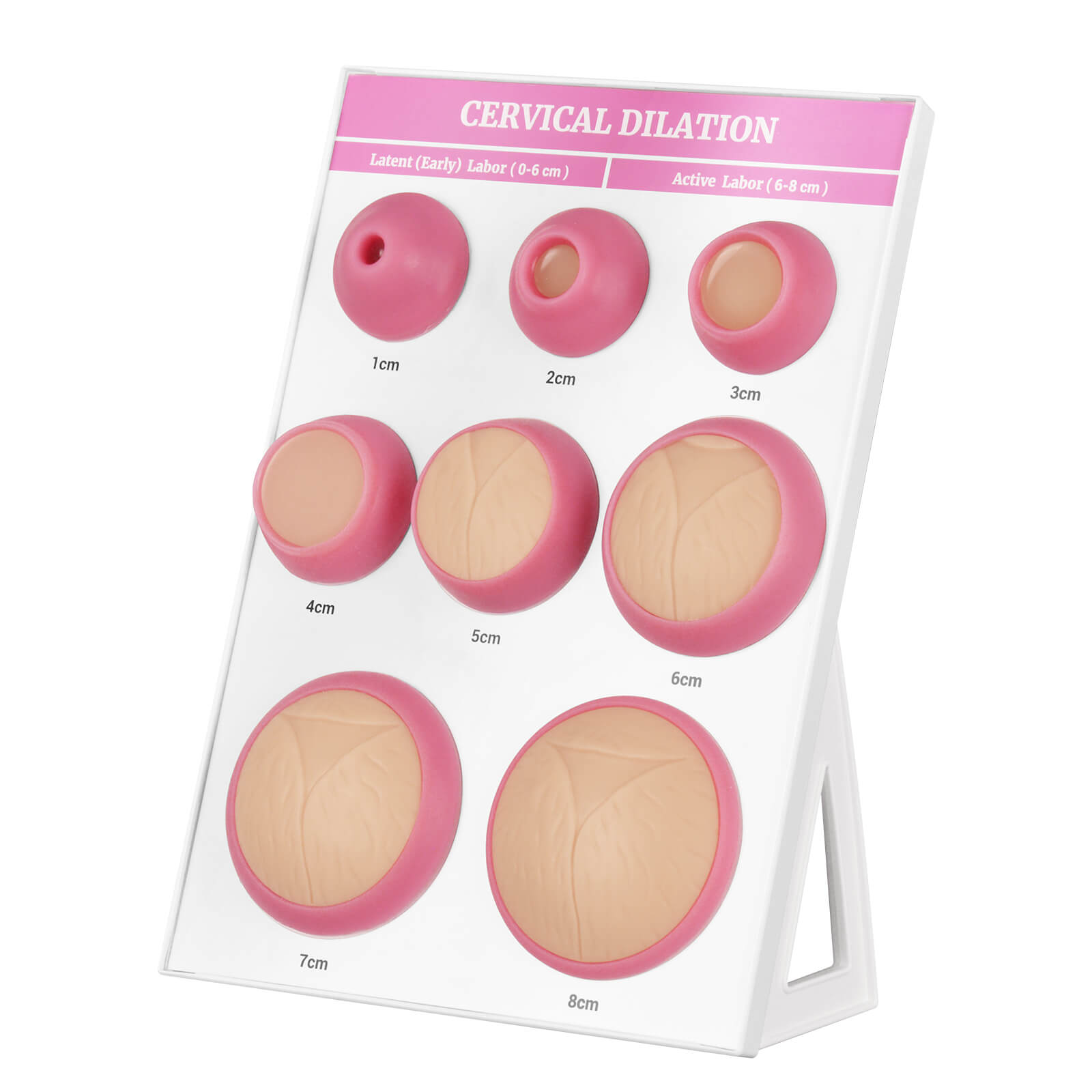
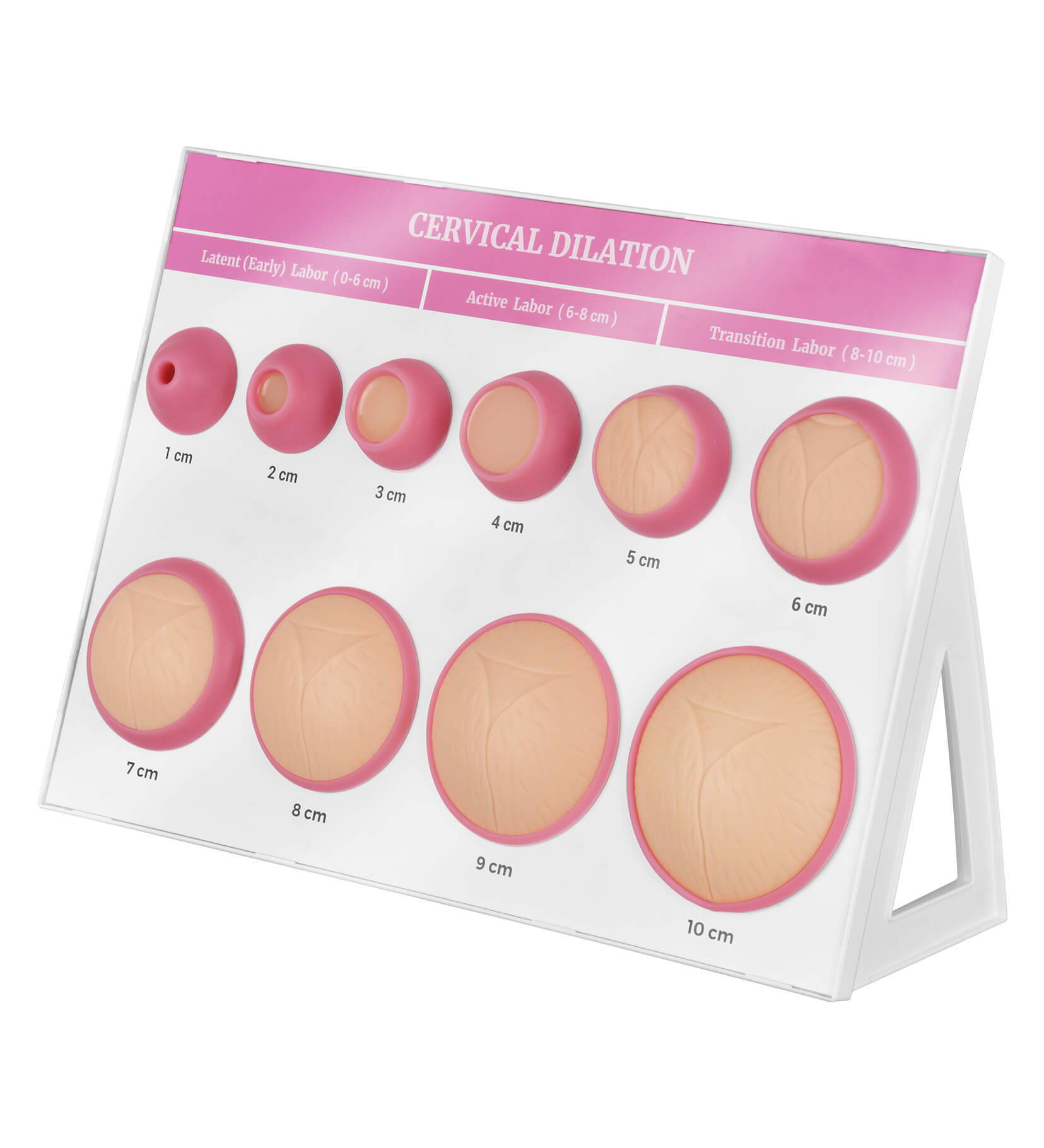
Cervical dilation refers to how open the cervix is, measured in centimeters from 0 cm (closed) to 10 cm (fully dilated).
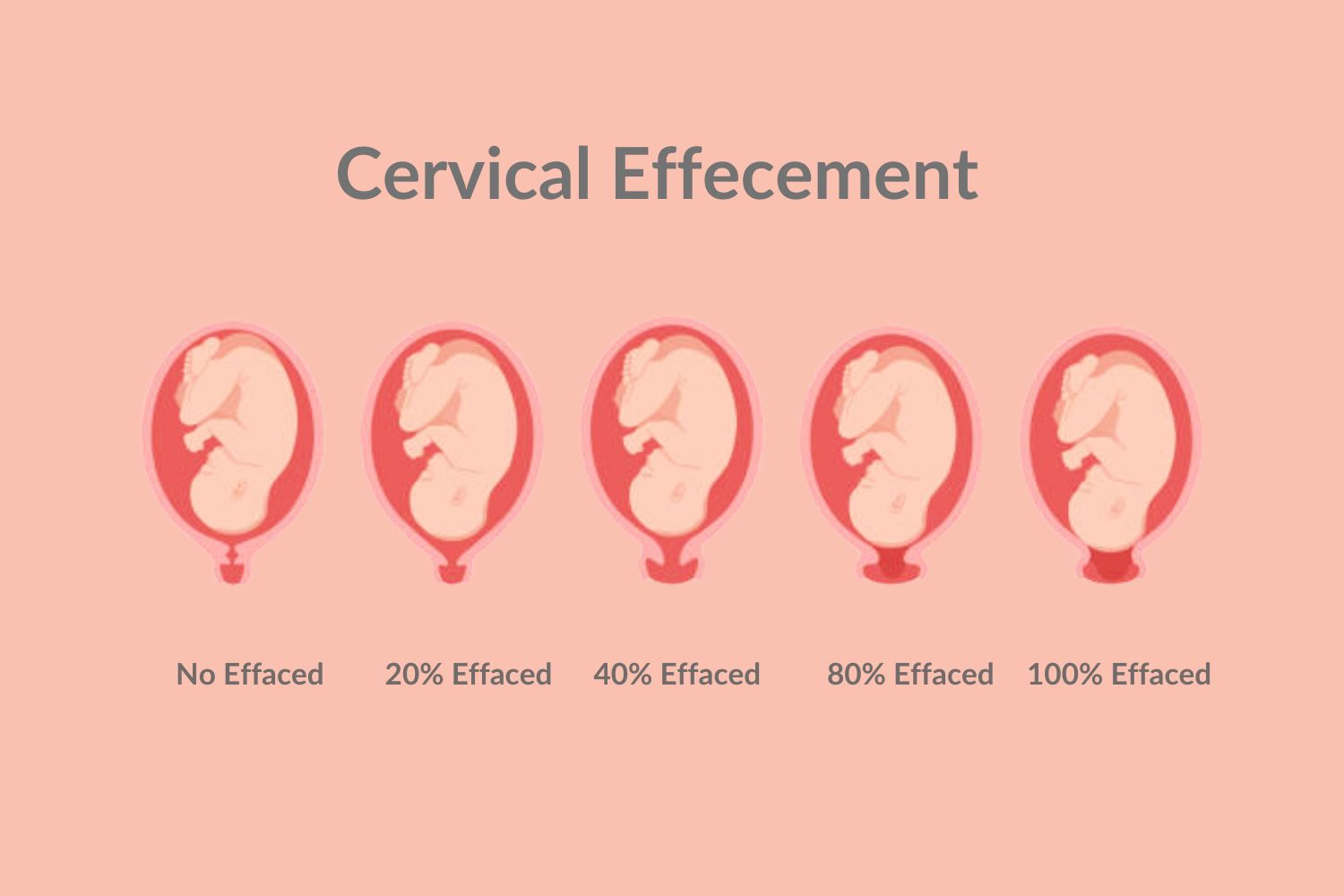
Cervical effacement refers to the thinning and shortening of the cervix, measured in percentage from 0% (not effaced) to 100% (fully thinned).
Effacement usually occurs before or along with dilation, especially in first-time pregnancies.
How to Measure Cervical Dilation with Fingers
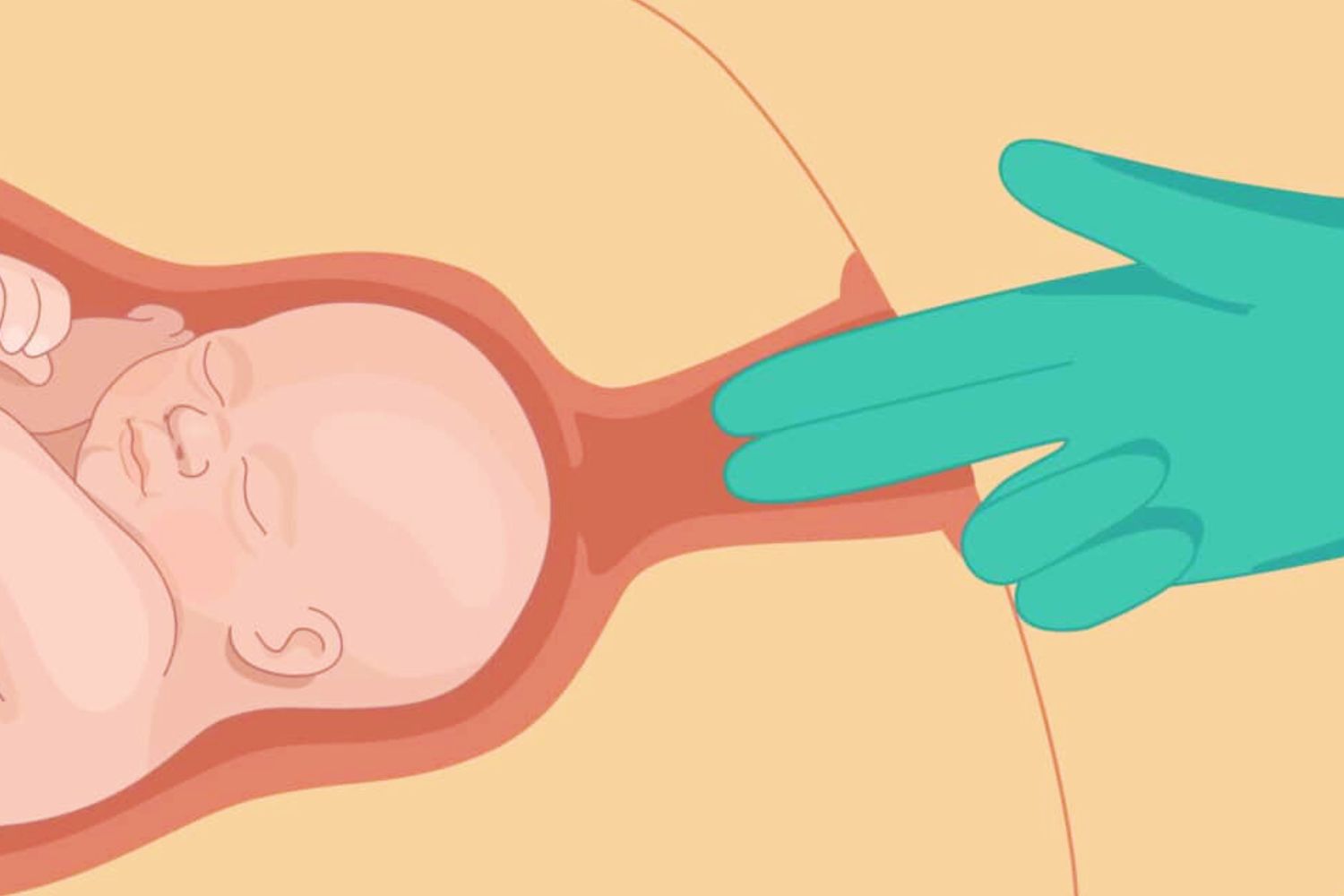
Medical professionals use a gloved hand to manually assess the cervix during labor. Here's a general guide to estimating dilation using fingers:
| Cervical Dilation | Finger Estimation |
|---|---|
| 1 cm | One fingertip fits inside |
| 2 cm | Two fingers barely fit |
| 4–5 cm | Two fingers slightly separated |
| 6–7 cm | Fingers spread wider, active labor phase |
| 10 cm | Fully dilated, ready for birth |
This method is widely used in clinical settings to estimate labor progression when direct measurement tools are not available.
Why Finger-Based Cervical Assessment Requires Training
Although finger estimation is a standard clinical method, it is one of the most difficult skills for beginners to master.
Common challenges include:
- Cervix position varies between patients
- Depth and texture are difficult to interpret through text or diagrams
- Dilation stages feel very similar without tactile reference
- Effacement is even harder to estimate manually
Because of this, learners often struggle to connect theoretical knowledge with real clinical assessment.
How Simulation Improves Cervical Examination Skills
In medical and midwifery education, hands-on simulation plays a key role in developing accurate cervical assessment skills.
By practicing with tactile models, learners can:
- Understand how 1–10 cm dilation actually feels
- Build finger estimation confidence
- Recognize differences between dilation stages
- Improve accuracy before real patient examinations
These tools are widely used in:
- Clinical skills laboratories
- Midwifery training programs
- OB/GYN simulation education
- Nursing practical training
Enhance Training with Realistic Cervical Dilation Models
For medical students, midwives, and nurses in training, tactile learning is key.
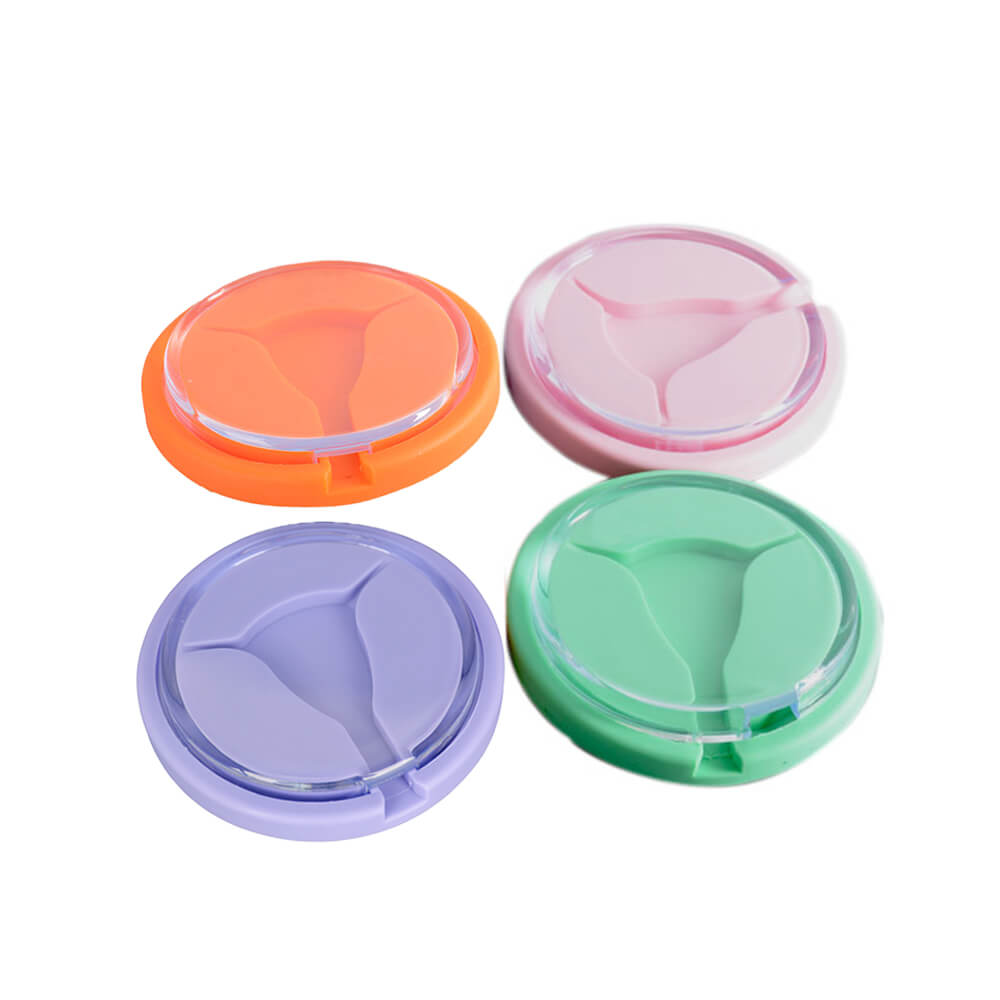
The Cervical Dilation and Effacement Models (1–10 cm) provide learners with realistic references to practice estimating dilation using fingers in a controlled training environment.
These silicone models help bridge the gap between theoretical knowledge and real clinical assessment.
How to Assess Cervical Effacement
Effacement is measured by the cervix's thickness and length:
| Effacement | Cervix Description |
|---|---|
| 0% | Long and thick (around 4 cm) |
| 50% | Half the normal thickness |
| 100% | Paper-thin and ready for delivery |
Healthcare professionals evaluate this during the same vaginal examination used to measure dilation.
Complete Learning with Effacement and Dilation Practice
The Cervical Dilation and Effacement Models Set of 10 with Easel Board Display includes both dilation stages and effacement variations, offering a complete representation of labor progression.
Its structured layout makes it especially suitable for:
- Classroom teaching
- Group demonstration
- Step-by-step skills training
When is It Appropriate to Perform Cervical Checks?
While some individuals may attempt self-examination during pregnancy, accurate cervical assessment is extremely difficult without training.
Limitations include:
- Cervix position may be high or difficult to reach
- Increased risk of infection
- Lack of clinical experience
- Misinterpretation of findings
For safety and accuracy, cervical checks should be performed by trained healthcare professionals.
From Theory to Practice: Why Training Tools Matter
Understanding cervical dilation and effacement in theory is only the first step. Clinical confidence comes from repeated visual and tactile exposure.
Training models allow learners to:
- Practice finger positioning techniques
- Recognize progression from 1–10 cm
- Understand effacement changes alongside dilation
- Develop real-world assessment confidence
👉 Explore Cervical Dilation Teaching Tools
Conclusion
Mastering cervical dilation and effacement assessment is fundamental for birth care professionals. While clinical exams require practice and precision, training with tactile models significantly improves learning outcomes.
These tools help bridge the gap between theory and real-life application, supporting better education, better assessments, and ultimately better patient care.
.jpeg?w=1500&h=1000)
.jpg?w=1000&h=1000)
.jpg?w=1000&h=1000)
.jpg?w=1500&h=1500)
.jpeg?w=1000&h=1000)
.jpg?w=1600&h=1600)
.jpg?w=1600&h=1600)
.jpg?w=1600&h=1600)
.jpg?w=1600&h=1600)
.jpg?w=1500&h=1500)
.jpg?w=1500&h=1500)
.jpeg?w=1000&h=1000)
.jpeg?w=1000&h=1000)
.jpg?w=1000&h=1000)
.jpg?w=1500&h=1500)
.jpeg?w=1000&h=1000)
.jpg?w=1000&h=1000)
.jpg?w=1000&h=1000)
.jpg?w=1000&h=1000)
.jpg?w=1000&h=1000)
.jpeg?w=1000&h=1000)
.jpeg?w=1000&h=1000)
.jpg?w=1000&h=1000)
.jpeg?w=1000&h=1000)
.jpeg?w=1000&h=1000)
.jpg?w=1000&h=1000)
.jpg?w=1000&h=1000)
.jpeg?w=1000&h=1000)
.jpeg?w=1000&h=1000)
.jpg?w=1000&h=1000)
.jpg?w=1500&h=1500)
.jpg?w=1500&h=1500)
.jpg?w=1000&h=1000)
.jpeg?w=1600&h=1600)
.jpeg?w=1600&h=1600)
.jpeg?w=1500&h=1500)
.jpeg?w=1500&h=1500)
.jpeg?w=1500&h=1500)
.jpeg?w=1500&h=1500)
.jpeg?w=1500&h=1500)
.jpeg?w=1500&h=1500)
.jpeg?w=1500&h=1500)
.jpeg?w=1500&h=1500)
.jpg?w=1000&h=1000)
.jpg?w=1000&h=1000)
.jpg?w=1000&h=1000)
.jpg?w=1000&h=1000)
.jpg?w=1600&h=1600)
.jpg?w=1600&h=1600)
.jpeg?w=1000&h=1000)
.jpg?w=1500&h=1500)
.jpg?w=1500&h=1500)
.jpg?w=1500&h=1500)
.jpg?w=1500&h=1500)
.jpeg?w=1000&h=1000)
.jpeg?w=1500&h=1500)
.jpg?w=1500&h=1500)
.jpg?w=1500&h=1500)
.jpeg?w=1000&h=1000)
.jpg?w=1000&h=1000)
.jpg?w=1000&h=1000)
.jpeg?w=1000&h=1000)
.jpg?w=1000&h=1000)
.jpeg?w=1000&h=1000)
.jpeg?w=1000&h=1000)
.jpeg?w=1000&h=1000)
.jpeg?w=1000&h=1000)
.jpeg?w=1000&h=1000)
.jpeg?w=1000&h=1000)
.jpg?w=1000&h=1000)
.jpg?w=1000&h=1000)
.jpeg?w=1000&h=1000)
.jpeg?w=1000&h=1000)
.jpeg?w=1500&h=1500)
.jpeg?w=1500&h=1500)
.jpeg?w=1600&h=1600)
.jpeg?w=1600&h=1600)
.jpeg?w=1500&h=1500)
.jpeg?w=1500&h=1500)
.jpeg?w=1500&h=1500)
.jpeg?w=1500&h=1500)
.jpeg?w=1500&h=1500)
.jpeg?w=1500&h=1500)
.jpeg?w=1500&h=1500)
.jpeg?w=1500&h=1500)